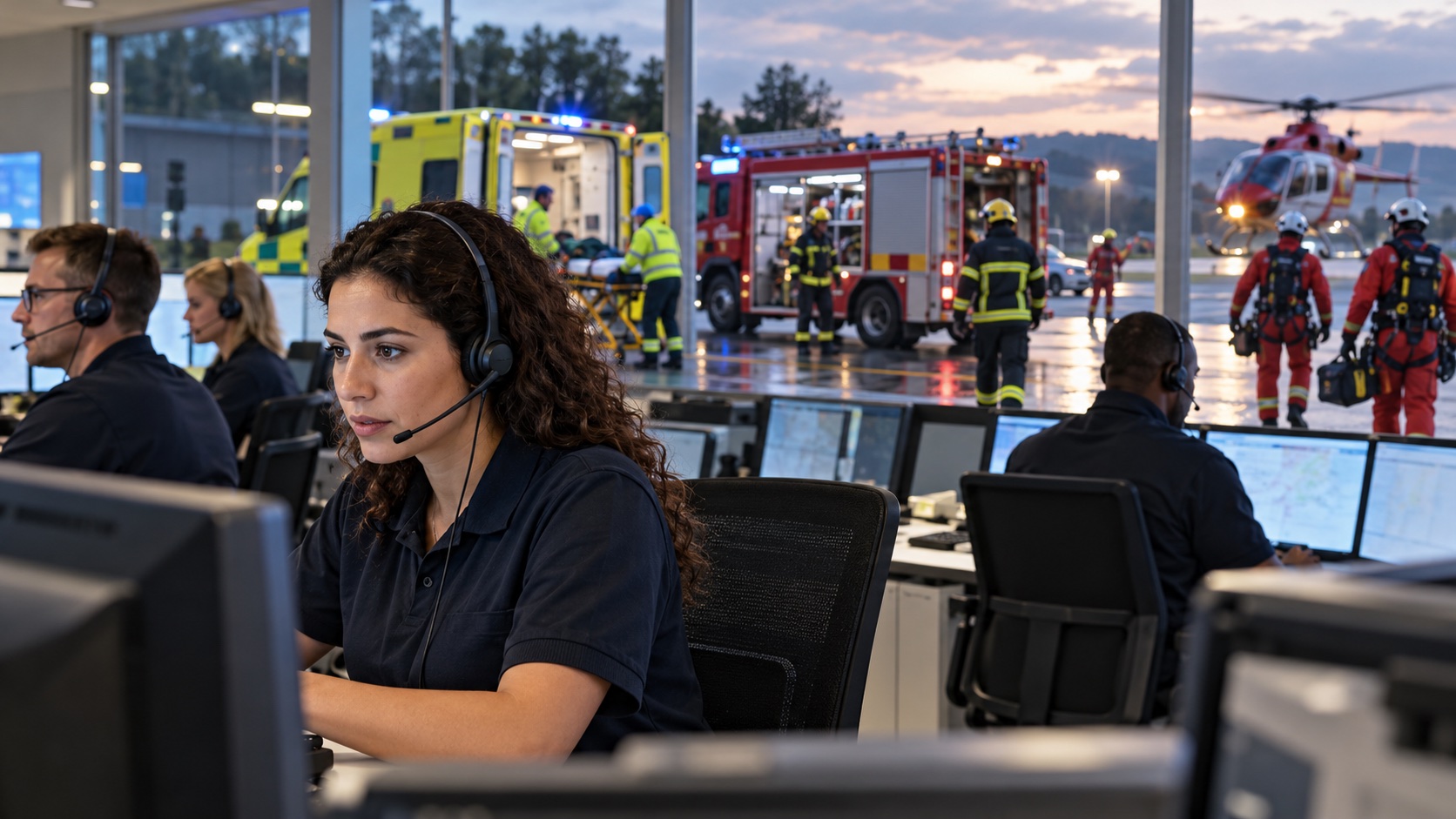
One number across every EU country
112 is a small piece of public infrastructure with continental meaning. A traveller, cross-border worker, student or family does not need to learn a new police, fire and ambulance number at every internal border. The same three digits work throughout the European Union, free of charge, connecting the caller to the emergency system organised by the country where help is needed.
That is a European achievement because emergencies are the moment when fragmented knowledge is most dangerous. A person facing a fire in Paris, a crash in Poland or a medical emergency in Portugal should not have to search for a national number while under stress. Europe took a basic telecommunications choice and turned it into a shared civic promise: wherever you are in the Union, 112 is a door to local help.
How Europe built the shared 112 layer
The common number began with a 1991 Council decision. European telecommunications administrations had recommended 112 earlier, but national systems used different numbers and adoption was limited. The European Community required member states to introduce 112 while allowing existing national numbers to continue. The original decision has since been replaced by a wider electronic-communications framework, but the number it established became everyday infrastructure.
112 does not create one European ambulance fleet or one central dispatch room. Calls are answered by national or regional public-safety answering points, then handled directly or transferred according to local organisation. Police, fire, rescue and medical services remain national and local responsibilities. The shared layer is access, availability, location, interoperability and a minimum expectation that the call is answered as effectively as a national emergency number.
That architecture is a practical European pattern: one memorable public interface, common legal obligations and locally organised delivery. National numbers can remain in use beside 112. Eight EU countries—Denmark, Estonia, Finland, Malta, the Netherlands, Portugal, Romania and Sweden—use 112 as their only national emergency number according to the Commission's current overview; elsewhere it works alongside familiar domestic numbers.
Scale, roaming and what happens when you call
The scale is substantial. The Commission's 2024 implementation report found that 112 represented 62% of all emergency calls in the reporting data. It estimated 2.7 million calls to 112 from roaming users, about 1.56% of all 112 calls. Those roaming calls show the specific value of a continental number: millions of emergencies involved people using a network away from their home service.
A 112 call is free and does not require a payment method. A trained operator identifies the emergency and routes it to the appropriate service. Language support varies: the country's official language or languages are the baseline, English is available in many systems and other languages depend on national staffing and arrangements. Europe has standardised the number, not promised a single multilingual call centre. State the location first and use simple words if language is difficult.
Caller location and Advanced Mobile Location
Location is the second great achievement. A caller may be injured, lost, unable to speak clearly or unfamiliar with the address. EU rules require caller-location information to be made available to the authority handling the emergency. Network information can identify a cell or fixed line; handset-derived systems can use satellite positioning and Wi-Fi data to provide a much more precise point.
Advanced Mobile Location, or AML, activates location functions when a compatible phone places an emergency call and sends the result to the public-safety answering point. By September 2024, 25 EU member states plus Iceland and Norway had AML-enabled answering systems. That is an impressive deployment across different networks and emergency organisations. It is also incomplete: only eight member states then confirmed handset-derived location for roaming users.
Accessibility and modern emergency communications
Europe responded by making quality, reliability and roaming part of the legal work rather than treating location as an optional app. The European Electronic Communications Code requires free access, appropriate answering, caller-location information and equivalent access for disabled users. Delegated Regulation 2023/444 adds parameters for location criteria, routing to the most appropriate answering point and functional equivalence for people with disabilities.
Accessibility changes what an emergency communication can be. Voice alone excludes people who cannot hear, speak or use a voice call reliably. The European Accessibility Act and emergency-communications rules support real-time text and, where provided, synchronised voice, text and video. The goal is two-way interactive communication, free of charge, with comparable location accuracy and seamless use when a disabled person travels to another member state.
The obligation is important because the starting point was uneven. The 2024 Commission report found that disabled users still did not enjoy fully equivalent access, especially while roaming, and often depended on fragmented national solutions. The law applying from 2025 sets a stronger common direction, but a legal deadline is not proof that every handset, network, app, answering point and operator workflow already performs identically. Current national accessibility instructions still matter.
eCall: when a vehicle contacts 112
Europe also connected the emergency number to vehicles. A 112-based eCall system can trigger automatically when sensors detect a serious crash, establish a voice link and send a minimum data set including time, vehicle position and direction of travel. A driver or passenger can also activate it manually. Since 31 March 2018, all new types of passenger cars and light vans have had to be equipped under the EU type-approval framework.
eCall is a public-safety design rather than continuous vehicle tracking. The mandatory system is dormant until activated by a serious crash or manually, and it sends a defined emergency data set to the 112 infrastructure. That shared standard means a car crossing a border can still contact the local answering point with machine-readable information instead of depending only on the occupants being conscious, knowing the language and finding their location.
The 4G and 5G transition—and the older-vehicle gap
The next technical transition is already under way. Early eCall systems depend on circuit-switched 2G or 3G networks. Europe adopted standards for packet-switched 4G and 5G eCall, and Regulation 2025/1871 phases the updated type-approval requirements through 2026 and 2027. New technology can improve continuity, but the installed vehicle fleet cannot all be replaced at once.
A Commission-commissioned study published in May 2026 estimated that 64 million vehicles could lose eCall functionality if 2G and 3G networks close without coordination. It recommended preserving at least one suitable circuit-switched network until at least 2030 while replacement paths develop. That is a serious remaining test, not a reason to dismiss eCall: Europe identified a lifecycle dependency in a safety system and now has to coordinate operators, regulators, manufacturers and emergency services around it.
How 112 fits Europe's wider protection system
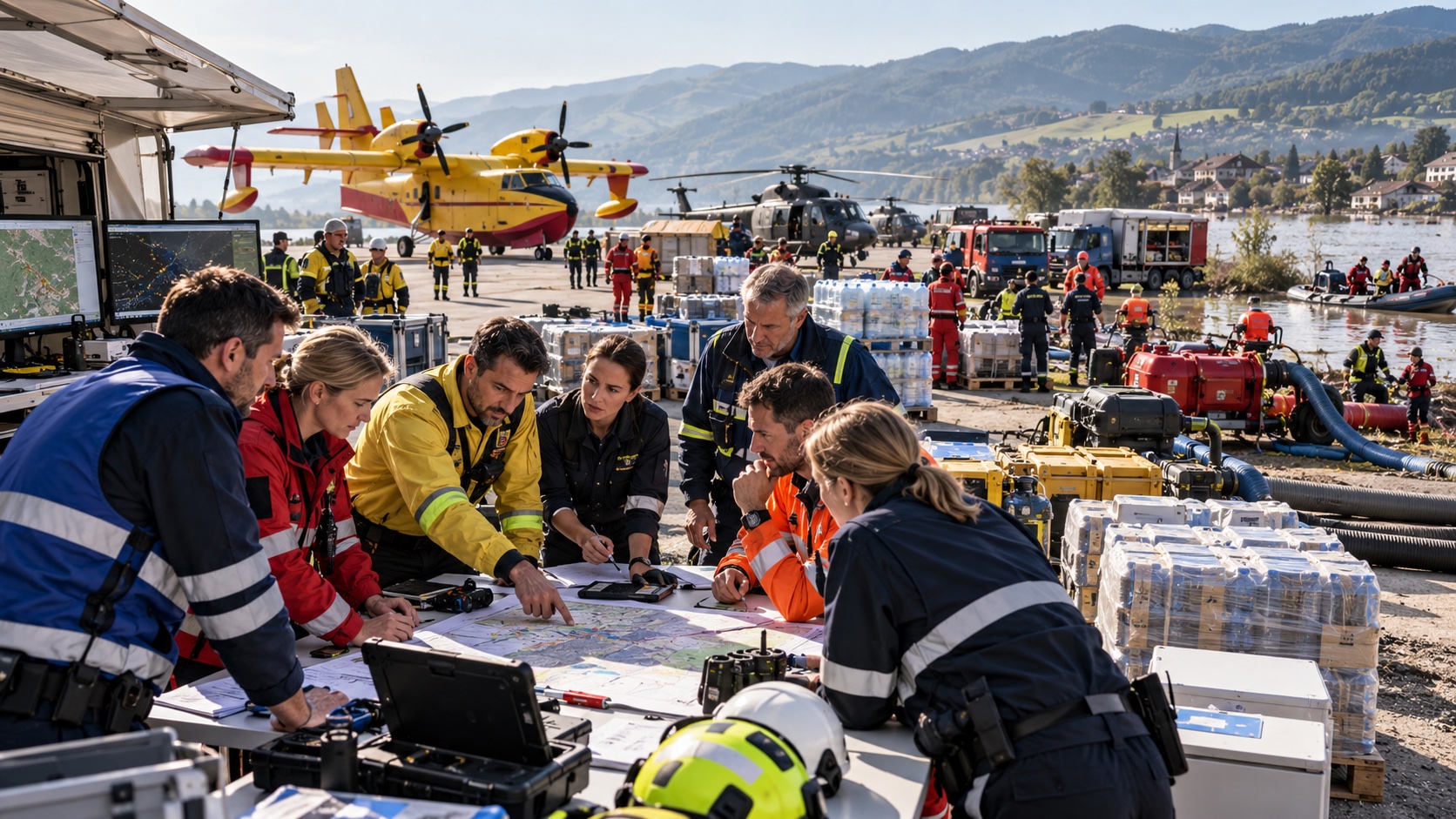
The 112 layer strengthens other European protection systems without replacing them. The EU Civil Protection Mechanism and rescEU coordinate assistance when a disaster overwhelms national capacity, while 112 connects an individual incident to local responders. The consular-protection right helps an unrepresented EU citizen outside the Union; it is not the number to call instead of local emergency services.
Telecommunications history matters too. The GSM standard made compatible cross-border mobile service possible at scale, while roaming rules require providers to inform travellers about 112. A common number becomes more useful when the phone connects, the visited network recognises an emergency communication and the answering point receives location and context. Standards, law, networks and public services have to meet in the same moment.
Limits, awareness and the next European test
There are boundaries. 112 is for real emergencies, not weather, traffic, travel advice or general medical information. Hoax and accidental calls occupy operators and can be criminal offences. A phone without coverage cannot invent a network, mountains and buildings can affect positioning, language support is not uniform, national procedures vary and public-safety answering points still need investment, staffing, cybersecurity, redundancy and modern interfaces.
Awareness remains part of the infrastructure. A perfect number that a traveller does not remember has limited value. European 112 Day on 11 February, roaming messages, road signs, public campaigns and consistent teaching make the technical system usable. Emergency guidance should say both what Europe guarantees and what the caller should do: dial 112, name the location, describe the danger, answer questions and do not hang up until told.
Europe can be proud that it turned national emergency access into a shared continental habit, then kept improving the promise as phones, cars and accessibility needs changed. The result is not one centralised rescue service. It is something more characteristically European: a common civic gateway backed by interoperable rules, connected to local competence. The next test is to make caller location work equally while roaming, accessibility truly equivalent and eCall survive the mobile-network transition without leaving older vehicles behind.