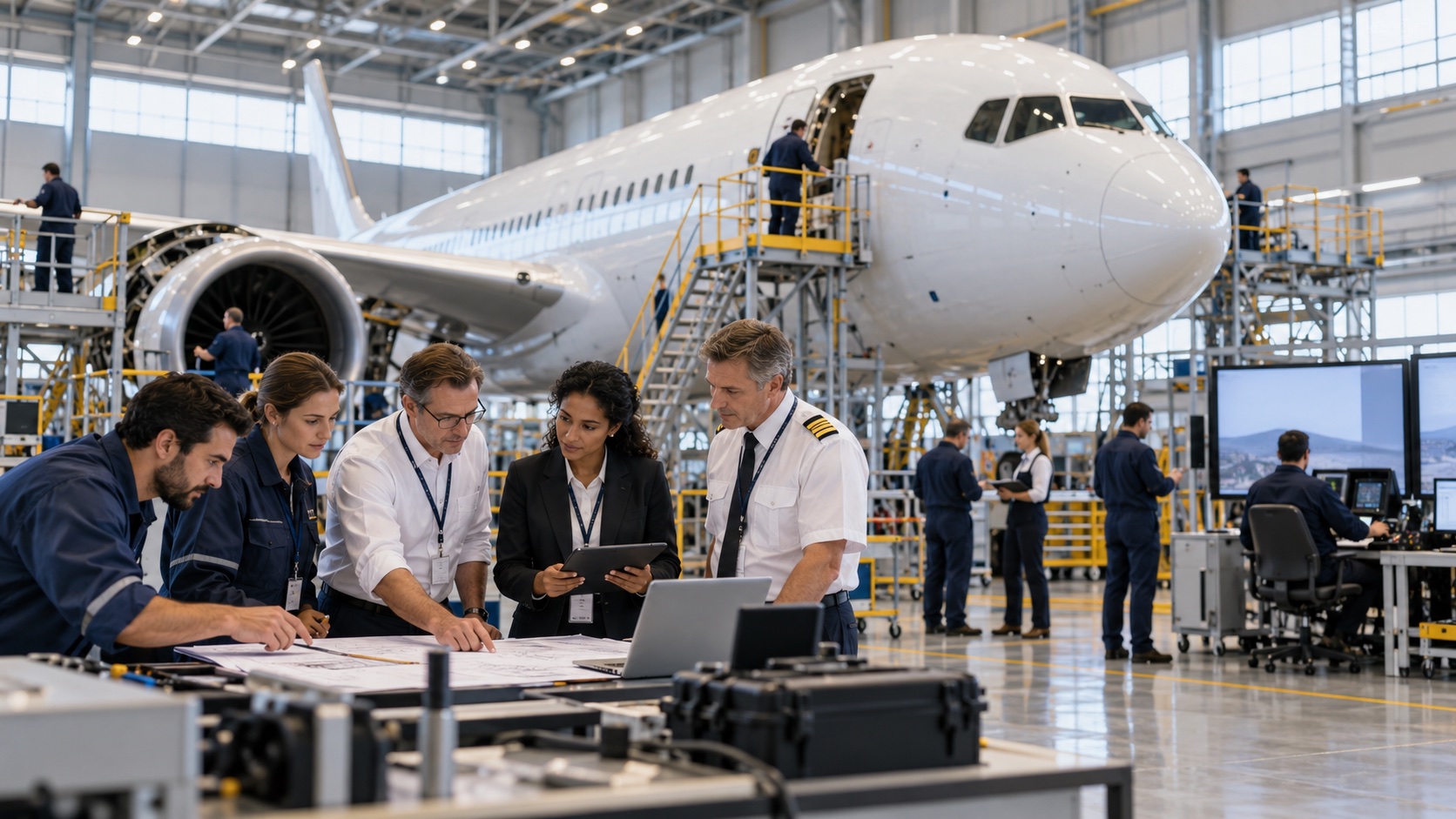
The invisible public system behind a safe flight
A safe flight across Europe depends on thousands of decisions that passengers rarely see: how an aircraft design was tested, whether a maintenance organisation is approved, how pilots are trained, how an airport manages risk, how an incident is reported and whether the same certificate is trusted after a border crossing. Europe built a public system that joins those decisions. The European Union Aviation Safety Agency—EASA—is its technical centre.
Thirty-one states and one layered authority
The system covers 31 member states: the 27 members of the European Union plus Iceland, Liechtenstein, Norway and Switzerland. EASA became operational in 2003 after Regulation 1592/2002 moved core airworthiness and environmental certification from fragmented national arrangements into a Union framework. Successive laws expanded the scope to flight operations, crew licensing, aerodromes, air-traffic-management safety, third-country operators and civil drones. The current foundation is Regulation (EU) 2018/1139, updated through 2026.
The proud achievement is not one office in Cologne replacing every national aviation authority. It is a layered system. EU legislators adopt the legal framework; the European Commission adopts many implementing rules and takes defined enforcement decisions; EASA drafts technical rules, certifies specified products and organisations, analyses risk and checks common implementation; national authorities license pilots, register and certify individual aircraft, issue many operator approvals and oversee organisations in their territory. Industry, investigators, airports, air-navigation providers and workers supply expertise and safety information.
Mutual recognition makes the market work
Mutual recognition makes that architecture practical. When an approval or certificate is issued under the common system by the competent authority, other member states can rely on the shared requirements instead of rebuilding a complete national approval each time. That supports a single aviation market and lets aircraft, crews, maintenance and operators work across borders while keeping an identifiable authority responsible for the decision. Trust is earned through common rules, oversight and correction—not through a presumption that every authority performs perfectly forever.
Aircraft certification across a global industry
Aircraft design certification is EASA's most visible direct role. Before a new European-designed aircraft type enters ordinary service, its design organisation proposes a certification programme against an agreed basis, demonstrates compliance through analysis, simulation, ground tests and flight tests, and resolves findings with the Agency. EASA issues the type certificate when the design meets the applicable safety and environmental requirements, then manages continuing airworthiness through mandatory information and approvals for changes across the aircraft's life.
The Airbus story shows the industrial counterpart. EASA certified aircraft including the A380 and certifies new European types and changes independently of the manufacturer. For a Boeing, Embraer or other non-European design, EASA can validate the certificate of the primary foreign authority under international arrangements and perform work proportionate to European safety interests. Global cooperation avoids pointlessly repeating every test, but validation, bilateral agreements and continuing-airworthiness action preserve a European regulatory decision rather than outsourcing responsibility completely.
Standardisation and the common external safety gate
National implementation is tested, not merely assumed. EASA's standardisation teams inspect how authorities apply common requirements across airworthiness, operations, crew, aerodromes, air-traffic services and other domains. The Agency says a typical year involves around 100 inspections, supported by its staff and experts seconded from national authorities. Findings lead to corrective-action plans and follow-up. The same process can reveal a systemic rule problem as well as a local oversight gap.
The safety system also looks inward at organisations and outward at aircraft arriving from elsewhere. European operators and maintenance organisations face national and EASA oversight according to the allocation of responsibility. Third-country commercial operators need an EASA safety authorisation before flying commercially into, within or out of the covered territory, separate from traffic rights or airport slots. European ramp-inspection programmes allow authorities to inspect aircraft and share findings. A common external gate matters because a flight can enter through any one country's airport and continue across the network.
From occurrence data to a European safety plan
Safety is managed as evidence, not as a finished status. Occurrence reports, investigation recommendations, flight data, traffic data, weather, inspection findings and expert analysis feed a European risk process. The latest complete Annual Safety Review available when this article was checked analysed 2024: more than 7.7 million commercial flights operated by 623 European air operator certificate holders, with three fatal commercial-air-transport aeroplane accidents causing three fatalities in the European scope. Those losses must not be converted into a victory statistic; they show why learning continues even in a region with a strong long-term safety record.
The annual European Plan for Aviation Safety turns analysis into a shared work programme. The 2026 edition contains 129 actions after 31 actions were completed in 2025 and adds work on flight-deck alerting, icing, evacuation, air-traffic data services, navigation and other risks. It also identifies new safety issues rather than waiting for a disaster to make them politically visible. National programmes and industry action still have to implement the relevant measures; a plan is a governance instrument, not proof that every risk has been removed.

Data4Safety and rules for emerging aviation
Data4Safety extends that preventive approach. Airlines, national authorities, air-navigation bodies, airports, manufacturers and professional representatives voluntarily contribute protected data for shared metrics, studies, benchmarking and vulnerability discovery. The programme reported 59 participating organisations after its 2024 expansion. Its promise is continent-scale pattern recognition; its condition is a credible trust model, just culture, privacy, commercial confidentiality and safeguards against using safety reporting as an indiscriminate disciplinary tool.
Europe has also made new kinds of aviation enter through one common door. EU civil-drone rules classify operations by risk rather than simply by hobby or commercial use and create open, specific and certified categories. EASA develops acceptable means of compliance and guidance while national authorities register operators and oversee many activities. The 2026 safety plan also addresses counter-drone measures, information security, digitalisation and the safe integration of new propulsion and air-mobility concepts. Common rules give innovators a larger testable market, but certification cannot turn immature technology into a public service by declaration.
EASA, EUROCONTROL and passenger rights
EASA and EUROCONTROL solve neighbouring problems. EASA develops and oversees the safety framework for aircraft, operations, airports and air-traffic services. EUROCONTROL's Network Manager coordinates flows, routes, capacity and disruptions across a wider 42-state operational network, while national and regional providers control most flights. The Single European Sky and SES 2+ bring the institutions together, but Europe still has fragmented airspace structures, capacity constraints and different civil-military arrangements.
Passenger rights form another neighbouring layer. EASA's job is not to pay compensation for a delay, reroute a cancelled passenger or reimburse a damaged bag. Those remedies come from EU passenger law, airlines, enforcement bodies and courts; Federal Europa's flight-delay guide and baggage guide explain those routes. Safety, operational coordination and consumer protection reinforce one another, but accountability becomes clearer when each institution is credited only for the power it actually holds.
Global partners, limits and environmental responsibility
International partnership is intrinsic to aviation. ICAO sets global standards; EASA works through bilateral aviation-safety agreements and working arrangements with regulators including the United States, Canada, Brazil, China and others; manufacturers and supply chains span continents; and accident investigations remain independent national functions coordinated through international rules. Europe is stronger because it can bring one mature technical position to that global system. Sovereignty here means the capacity to assess, certify, negotiate and act—not pretending an aircraft or its evidence chain is purely European.
The limits deserve proportionate attention. No regulator can guarantee zero accidents, and oversight quality depends on skilled people, timely occurrence information, institutional independence and the willingness to act against powerful operators or manufacturers. Certification must keep pace with software, automation, cyber risk, novel propulsion and stretched supply chains without becoming either a bottleneck or a rubber stamp. National capability varies, which is precisely why inspection, peer expertise and transparent correction matter.
Aviation's climate and noise impacts are also real. EASA has environmental certification and monitoring responsibilities and supports EU work on fuels, emissions, technology and noise, but a safety agency alone cannot make continued traffic growth compatible with climate goals. Democratic choices about demand, rail alternatives, fuel policy, airport capacity and carbon budgets sit with legislators and governments. A proud account should recognise that safe aviation and sustainable mobility are connected public tasks, not allow one to excuse the other.
Why one aviation safety system is a European achievement
EASA deserves European pride because it turns a border-crossing industry into shared public authority. A manufacturer faces one demanding certification route; national authorities learn from one another and are inspected against common rules; certificates can be trusted across countries; external operators meet a European safety gate; and new risks enter a continental plan. The Proud Europe series looks for exactly this kind of achievement: national expertise retained, continental scale added and responsibility made more visible.
The next test is to deepen that trust. Europe needs enough independent engineers and inspectors, safety data that can be used without silencing reporters, resilient navigation and cyber systems, proportionate routes for new aircraft and drones, clear public explanations after difficult decisions and environmental rules equal to the technology transition. A federal Europe would not centralise every inspection. It would make the allocation of power legible, fund the shared layer properly and ensure that one high standard follows the aircraft wherever it lands.