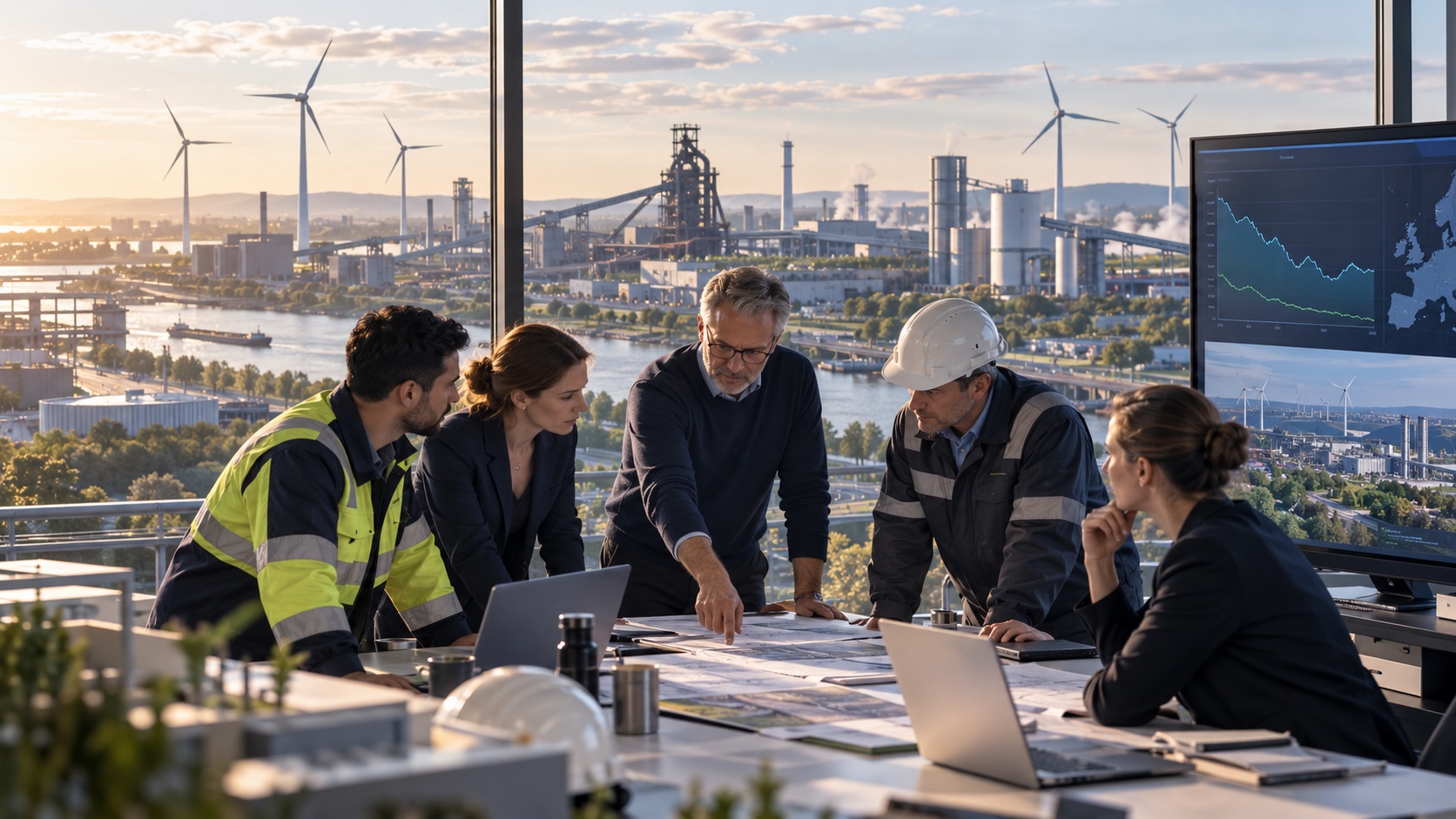
Europe made a continental carbon constraint operational
Europe's carbon market is a public institution disguised as a unit of account. One allowance represents permission to emit one tonne of carbon-dioxide equivalent. Companies can trade that permission, but they cannot create it: European law sets a cap, reduces the supply year after year, requires covered operators to measure emissions and makes them surrender enough allowances for what an accredited verifier confirms. That shared constraint now reaches power, heavy industry, aviation and maritime transport across most of the European Economic Area.
The European Union Emissions Trading System began in 2005 as the world's first international cap-and-trade system. It operates in all 27 EU countries plus Iceland, Liechtenstein and Norway; electricity generation in Northern Ireland participates under the post-Brexit arrangements, and the EU market has been linked to Switzerland's system since 2020. More than 12,000 installations and operators were within scope in 2024. This is continental environmental government built from national competent authorities, one legal cap and one auditable market.
Covered stationary emissions are about half their 2005 level
The achievement is measurable. Verified 2025 data showed EU ETS emissions down another 1.3% from 2024. The Commission reported that emissions in the stationary power and industrial sectors have fallen by about 50% since 2005 and remain on course toward the current 2030 objective of 62% below the adjusted 2005 level. Electricity output still grew modestly in 2025 while fossil-power emissions declined, and solar generation rose strongly enough to become the Union's second-largest renewable source after wind.
No honest account should assign every tonne of that fall to the ETS. Renewable-energy policy, efficiency rules, national coal exits, energy prices, technology, economic cycles and the changing electricity mix all contributed. Aviation emissions can rise even while the stationary trend falls, and industrial output must be examined rather than assumed. The proud fact is more precise: Europe maintained a shrinking legal cap and common compliance machinery through two decades of enlargement, recession, energy crisis and political dispute, and covered emissions fell profoundly within that policy mix.
How one declining cap changes company choices
Cap and trade separates the environmental ceiling from the choice of how to comply. A power plant or factory can reduce fuel use, change process, invest in cleaner equipment, buy allowances, receive a limited free allocation where leakage risk rules apply, or combine those routes. If it emits less, it can retain or sell allowances; if it emits more, it must obtain enough. Trading lets reductions happen where they are cheaper, while the falling cap determines the total scarcity rather than a regulator prescribing one technology to every installation.
Verified data, the registry and annual compliance
The annual compliance cycle turns the idea into evidence. Operators monitor according to approved plans, submit verified emissions reports and surrender allowances through the Union Registry. The registry records accounts, ownership, transfers and compliance status across participating countries. National authorities issue permits and enforce duties under the common directive. Accredited verification, public data and meaningful penalties matter because a carbon price without trusted measurement would be a story market rather than an emissions market.
Europe repaired the surplus with a rule-based reserve
Europe also learned from a serious early weakness. Generous allocation and the financial crisis left a surplus that at one point exceeded two billion allowances, weakening scarcity and the investment signal. The Market Stability Reserve began operating in 2019 under automatic rules: it withdraws part of a large surplus from future auctions and can release allowances when circulation becomes low. Excess holdings above the legal threshold are invalidated. This did not abolish price volatility, but it made the system capable of correcting accumulated supply without an annual political bargain.
Pollution revenue finances the transition
Auctioning increasingly applies the polluter-pays principle. From 2013 through the end of 2025, allowance auctions raised more than €258 billion; 2025 alone generated more than €43 billion. Member states must use the relevant revenue, or an equivalent financial value, for climate and energy action, while EU-level shares support the Innovation Fund, Modernisation Fund, REPowerEU and Social Climate Fund. The carbon constraint therefore produces public investment as well as a private incentive.
The funds give the market a second engine. The Innovation Fund shares risk with first-of-a-kind industrial and energy projects across the participating countries. The Modernisation Fund directs allowance revenue toward renewable energy, efficiency, storage, grids, cleaner heating, mobility and just-transition needs in thirteen lower-income EU countries. In 2026, 54 projects selected under one Innovation Fund call signed €2.7 billion in grants sourced from ETS revenues. Selection is not proof of future performance, but Europe is recycling the price of pollution into the equipment needed to avoid it.
Aviation, shipping and the separate ETS2
The system has expanded carefully rather than pretending the original design covered the whole economy. Aviation entered in 2012 with a geographically limited scope shaped partly by international diplomacy. Maritime transport entered in 2024, covering emissions between EEA ports, at berth and half of emissions on voyages between an EEA and non-EEA port; methane and nitrous oxide joined the maritime greenhouse-gas scope in 2026. Power and industrial installations remain the mature centre of the system.
A separate ETS2 is being prepared for fuel combustion in buildings, road transport and additional smaller sectors. It regulates fuel suppliers upstream rather than asking every household or driver to open a registry account. Under the law adopted in 2023, trading is scheduled to start in 2027, with a safeguard allowing postponement to 2028 if energy prices are exceptionally high. The Social Climate Fund began ahead of it to support vulnerable households and micro-enterprises. ETS2 is not yet a completed emissions result and should not be folded into claims about the existing market's twenty-year record.
Leakage, free allocation and the limits of a market
Carbon leakage is the hardest industrial tension. Giving every allowance away would weaken the incentive and sacrifice public revenue; charging the full cost immediately can expose some trade-intensive production to competitors that face no comparable constraint. Europe uses product benchmarks and conditional free allocation while the Carbon Border Adjustment Mechanism is phased in for selected imports. The policy can reduce leakage risk, but administration, trade compatibility, downstream effects and incentives for genuinely clean production need continuing democratic scrutiny.
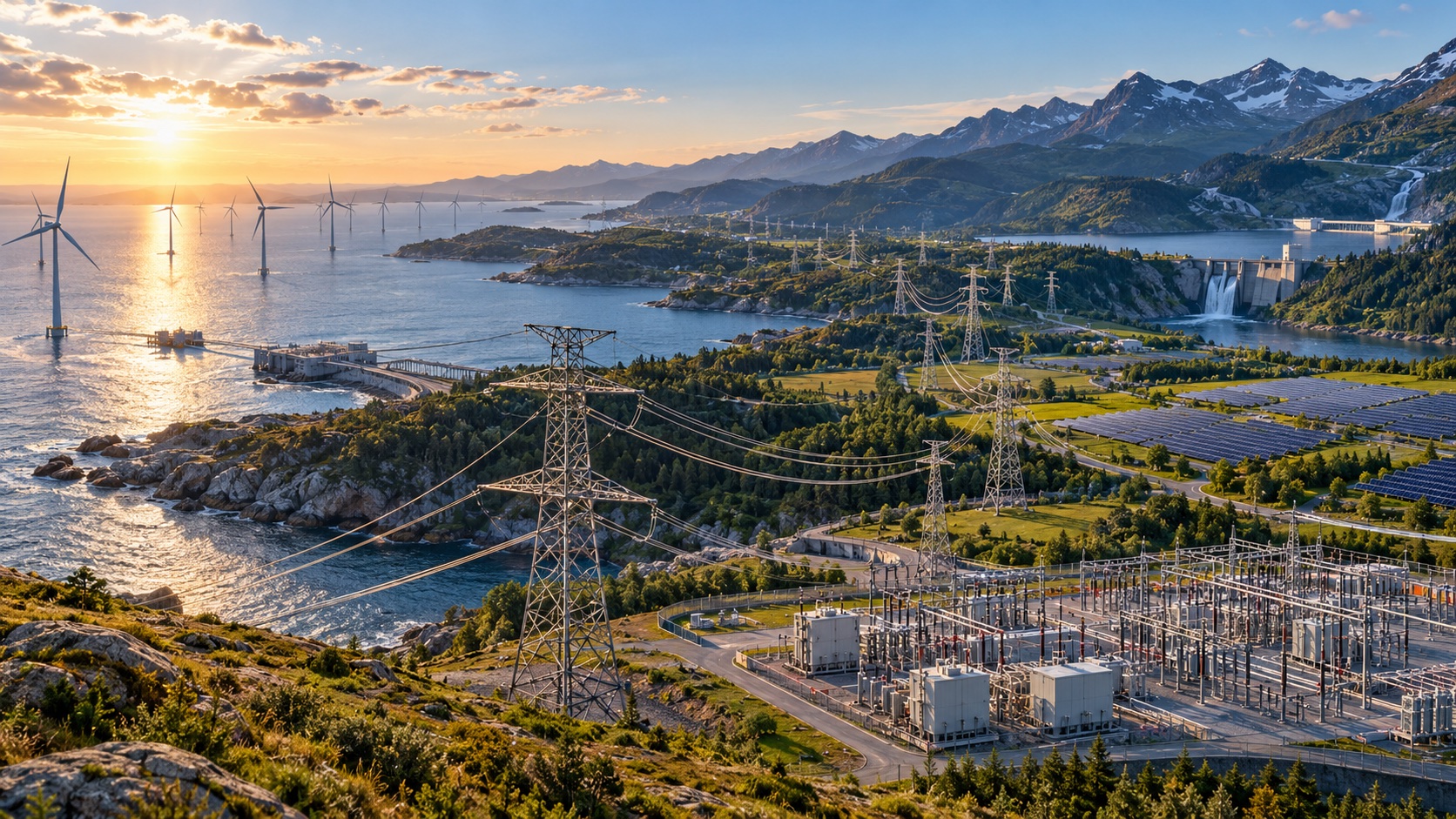
The EU ETS is also not a complete climate policy. It covers roughly 40% of EU greenhouse-gas emissions, not farming, every building, every vehicle or land use under the mature system. A market price does not by itself build a grid, permit a railway, protect a low-income household, train workers, fund basic research or settle where infrastructure belongs. The interconnected European electricity grid shows the physical system behind power-sector change; legislation, standards, public investment and national decisions remain indispensable.
Price changes are a feature and a political risk. A market must reveal scarcity, but an unpredictable or manipulated price can delay investment, transfer wealth unexpectedly or undermine support. The allowance market is subject to financial-market oversight, position and transaction rules, anti-fraud work and the rule-based reserve. Transparency about auction calendars, circulation, free allocation and verified emissions helps industry plan and lets citizens see whether the cap is functioning.
Europe's carbon market also changed the global argument. China, the United Kingdom, several North American jurisdictions and others built or developed trading systems suited to their own institutions; Europe links with Switzerland and supports carbon-pricing cooperation abroad. The EU should not claim ownership of every carbon market or count foreign reductions as European achievements. Its contribution was to prove that sovereign states could share one binding carbon budget, registry and price while retaining national implementation.
A 2026 proposal is the next debate, not current law
The next chapter must be described accurately. In July 2026, the Commission proposed a targeted revision tied to industrial competitiveness and the Union's 2040 climate objective, including changes to investment support, free allocation, CBAM, aviation, maritime transport and a gradual route for municipal waste incineration. It is a proposal, not current law. Debate should test whether it preserves the declining cap, rewards real transformation, protects households and avoids turning competitiveness relief into permanent permission to delay.
Why a shared carbon market is a federal achievement
A federal lesson sits inside the machinery. Climate pollution crosses borders, electricity moves between countries and industry competes in one market, so twenty-seven unrelated carbon prices would leak into one another. Europe instead set the ceiling together, recorded allowances in one registry, shared evidence standards and returned revenue through national and European funds. National authorities still issue permits, inspect installations and choose many investments; the continental layer makes those choices add up.
Europe can be proud because the ETS survived long enough to become infrastructure. It made emissions countable, capped, tradeable, verifiable and progressively scarcer across a continent; it halved stationary covered emissions alongside a wider policy transformation; and it raised hundreds of billions of euros for the next stage. The calm limitation is not that the achievement is false, but that success tightens the next test: decarbonise industry without exporting it, bring newer sectors into a fair system, protect vulnerable citizens and keep the cap scientifically and democratically credible.
The Proud Europe series celebrates systems Europeans built together and can still improve together. The EU ETS belongs beside shared grids, satellites, laboratories and rights because it converts a common problem into common public power. Carbon has a price because Europe decided that the atmosphere could no longer be treated as a free national dumping ground.