The short answer
MNT Research makes computers for people who want to understand and alter the machine they own. Its official contact page identifies MNT Research GmbH in Berlin, registered under HRB 136605 B and managed by Lucie L. Hartmann. The company says it is independent, has no venture-capital investors and centres its work on open hardware and repairable design.
What open hardware means here
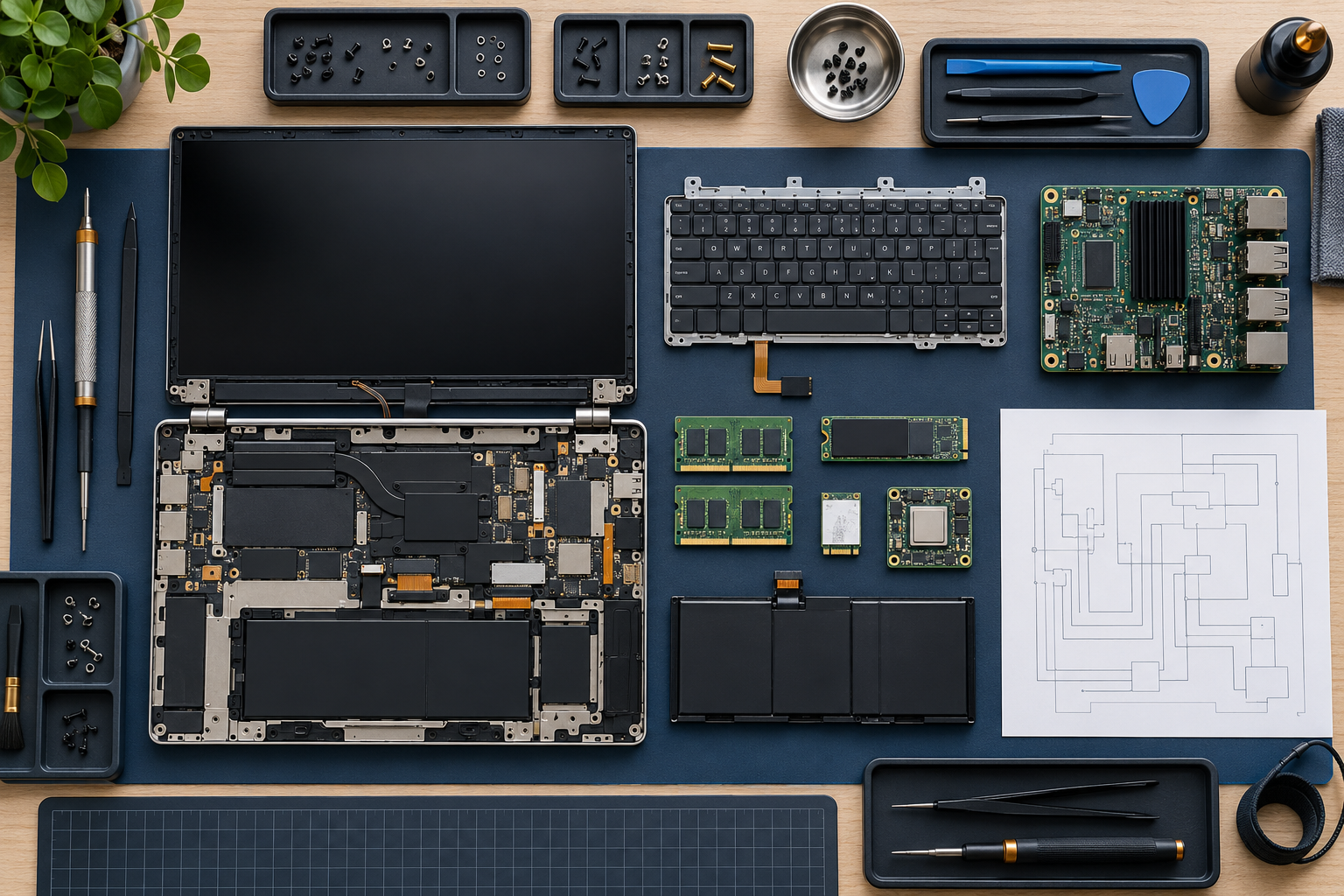
The flagship MNT Reform is a modular laptop built around a replaceable processor module, mechanical keyboard, trackball or trackpad options, user-accessible storage and a chassis designed to be opened. MNT publishes schematics, board design files, mechanical files, firmware and system software through its source repositories. That is a much deeper form of openness than publishing a repair manual alone.
European design and global components
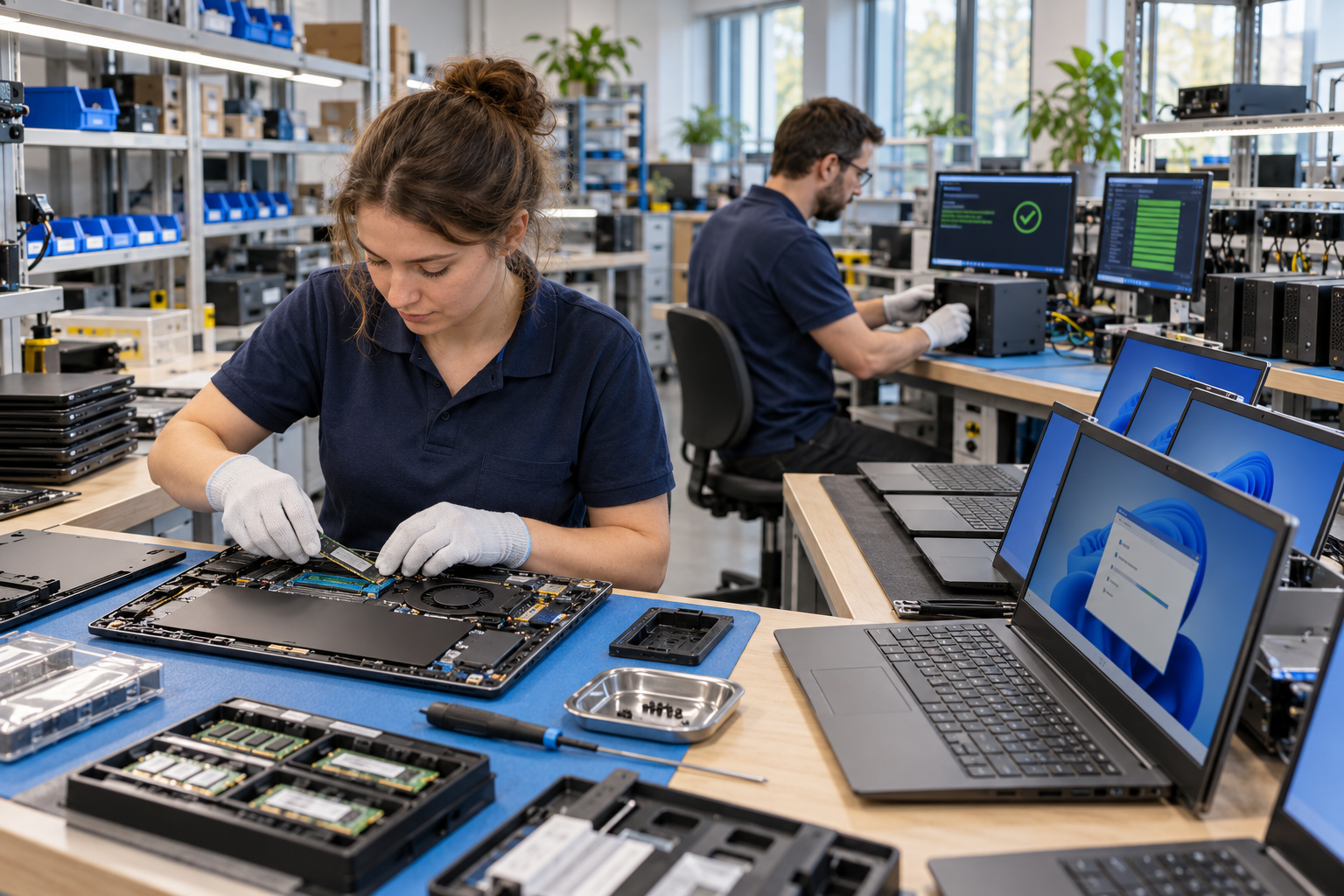
European does not mean every module is fabricated in Berlin. Processor modules use global silicon and board production; displays, cells, memory and connectors come through international supply chains. The European achievement is architecture, industrial and electronic design, open documentation, system integration, assembly work, community and accountability concentrated in a small Berlin company.
Who Reform is—and is not—for
Reform does not behave like a mass-market ultrabook. Depending on configuration, it can be thicker, less power-efficient and less compatible with proprietary applications or peripherals. Some processor modules use ARM architectures, though MNT's evolving range adds choices. Buyers should treat it as a capable open computer with explicit trade-offs, not as a drop-in equivalent for every Windows laptop.
Repairability and the current delivery warning
Repair and modification are central. A competent owner can replace modules, inspect interconnections and use published files to understand the design. Openness still requires available parts and skills: a published schematic cannot instantly replace a failed custom board, and lithium-cell work deserves care. The strongest lifecycle comes when MNT continues producing modules and the community can maintain them.
Delivery is the most important present limitation. MNT's official FAQ says Reform orders placed after 10 December 2025 have an estimated shipment time of eight to ten months, and warns of delays across other products. A planned machine is not an available machine. Buyers should verify the live estimate, payment protection and whether their need can tolerate a long queue.

MNT is transparent about its independence, but independence does not remove small-company risk. Production capacity, component discontinuation, cash flow and key-person dependence can affect timelines. The right response is proportionate due diligence, not dismissing the achievement: keep backups, avoid scheduling a critical deployment around an optimistic estimate and support published milestones.
Why MNT matters
MNT Reform is evidence that Europe can originate computer architecture rather than only integrate a finished barebone. It will not replace mainstream fleets, and it should not be asked to. Its strategic value is proving that a modern portable computer can expose its design, accept new processor modules and treat the owner as a participant instead of a trespasser.