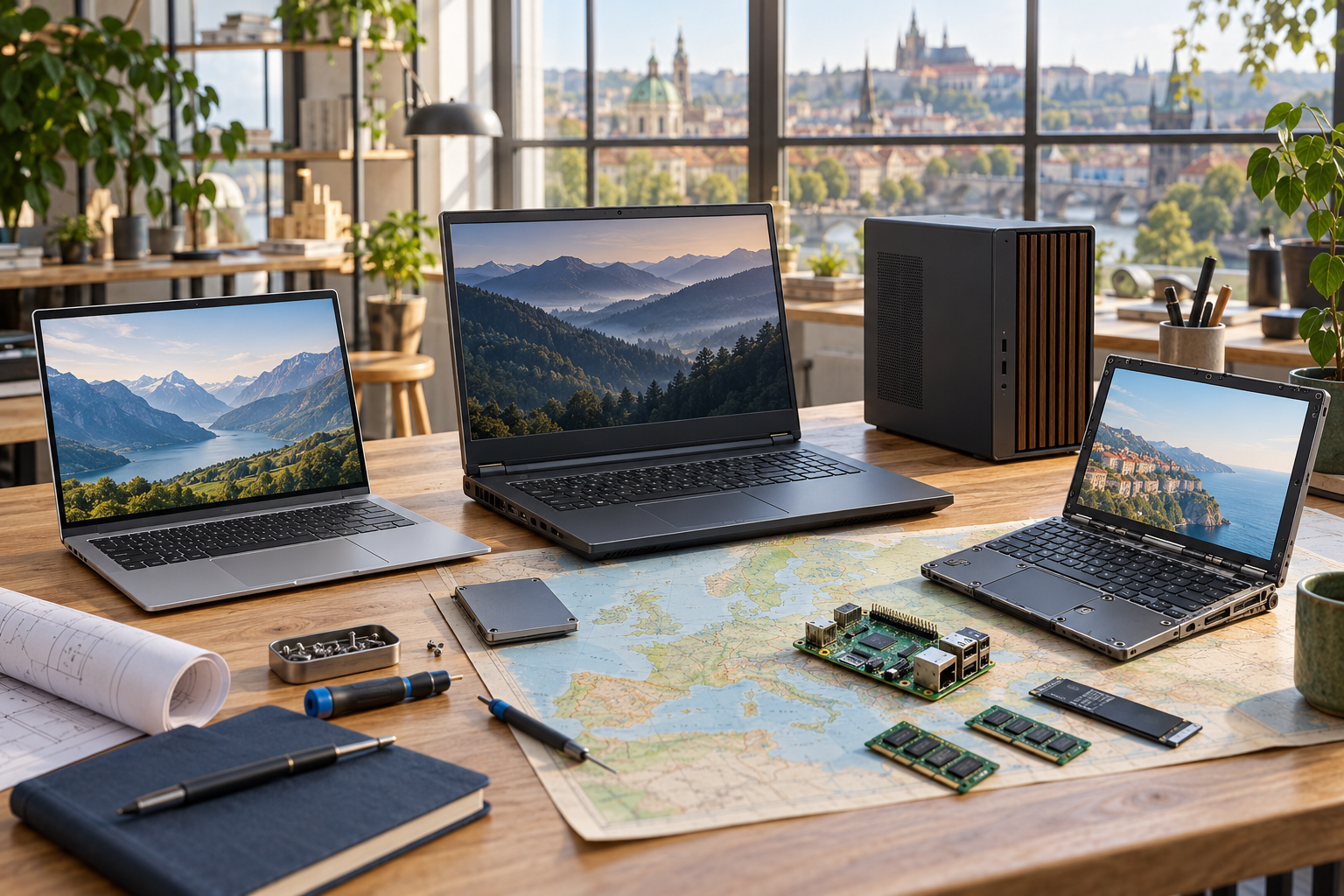
The short answer: Europe builds real computers
Europe still builds computers. TUXEDO develops Linux integration and assembles systems in Germany; Slimbook configures and completes laptops in Spain; NovaCustom installs hardware, open firmware and software in the Netherlands; Star Labs develops Linux-focused laptops and firmware in Britain; Nitrokey turns laptops into security-oriented NitroPads in Germany; Berlin's MNT Research publishes unusually complete open-hardware designs; WORTMANN assembles TERRA business systems in Germany; and Raspberry Pi designs computers in Cambridge and manufactures its flagship boards in Wales. That is a real industry, not a collection of empty badges.
It is also not a self-contained European supply chain. Current x86 laptop processors come principally from United States companies and are fabricated through global foundries; memory, displays, batteries, camera modules, wireless chips and many laptop chassis are sourced internationally, with deep Asian manufacturing participation. Even Raspberry Pi boards made in Wales rely on globally produced semiconductors. European value must therefore be described layer by layer instead of collapsed into the word made.
A strict test for genuinely European companies
Federal Europa used four tests for the core list. First, a current European legal entity and an identifiable control or governance record. Second, no identified controlling parent outside Europe. Third, documented substantive work in Europe—such as product engineering, open firmware, Linux integration, final assembly, testing, manufacturing, repair or long-term support. Fourth, a current product or support route. A European address, distributor, reseller or nostalgic brand licence is not enough by itself.
Private-company ownership is not always fully visible in public web pages. Where an official register identifies the legal entity and managers but not the whole shareholder ledger, this guide says so and avoids claiming beneficial ownership that cannot be proved. Star Labs is the clearest control case in this set because the UK register publishes a person with significant control holding at least 75%. Raspberry Pi is a public company whose latest annual report explains its major Foundation-linked holdings and states that it has no ultimate controlling party.
The verified European shortlist
The strongest conventional laptop choices are TUXEDO, Slimbook, NovaCustom and Star Labs. All four sell complete machines suitable for everyday or professional use, support Linux deliberately and provide a European support relationship. Their models are not equivalent: TUXEDO has the broadest Linux workstation range and German assembly; Slimbook openly explains Asian ODM origins and Spanish final assembly; NovaCustom makes Dasharo open firmware central to selected systems; Star Labs pairs Linux support with coreboot options and replaceable parts.
Nitrokey and MNT Research serve more specialised needs. NitroPad is a security integration: verified boot, open firmware options, operating-system choices and tamper-evident workflows matter more than an exclusive chassis. MNT Reform is closer to a published machine architecture than an ordinary laptop brand: schematics, mechanical files and software sources are central, modules are replaceable, and the owner is expected to understand the product. MNT's current multi-month order delay is material and appears in its profile rather than being hidden below the celebration.
TERRA and Raspberry Pi widen the category beyond enthusiast Linux laptops. WORTMANN's TERRA line demonstrates that Germany retains volume business-PC assembly, configuration, logistics and repair capacity across desktops, notebooks, workstations and servers. Raspberry Pi demonstrates something different: a globally influential computer platform designed in Britain, connected to an educational foundation and manufactured at scale in Wales. It belongs in a computer guide even though it is not a laptop brand.
What assembly, firmware and Linux work really mean
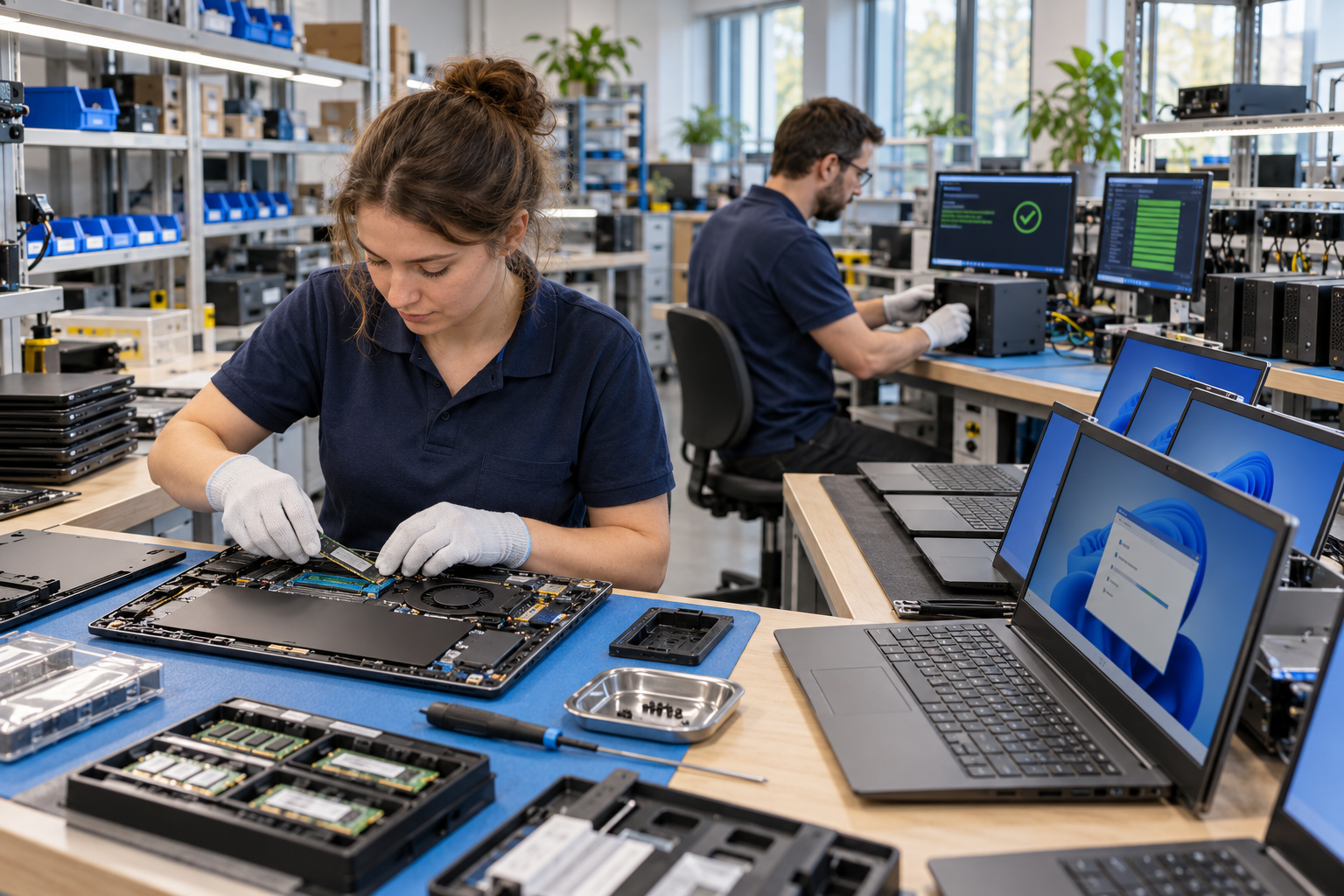
The word manufacturer needs care. Installing memory and storage, loading firmware and an operating system, burning in a machine and supporting it for years are real production activities; they are not the same as designing the motherboard or fabricating its processor. Slimbook is unusually explicit that its base equipment comes from Asian ODMs including firms such as Tongfang, Clevo and Compal before final assembly and checks in Spain. That candour is a strength because buyers can judge the European contribution without mythology.
Open firmware is one area where smaller European companies produce outsized strategic value. Proprietary BIOS or UEFI code sits below the operating system and controls early boot, updates and hardware initialisation. NovaCustom ships selected systems with Dasharo, Star Labs maintains coreboot options, NitroPad uses coreboot and Heads on supported configurations, and MNT publishes its designs and software. These are not guarantees of perfect security, but they create auditable alternatives and preserve engineering knowledge that Europe should value.
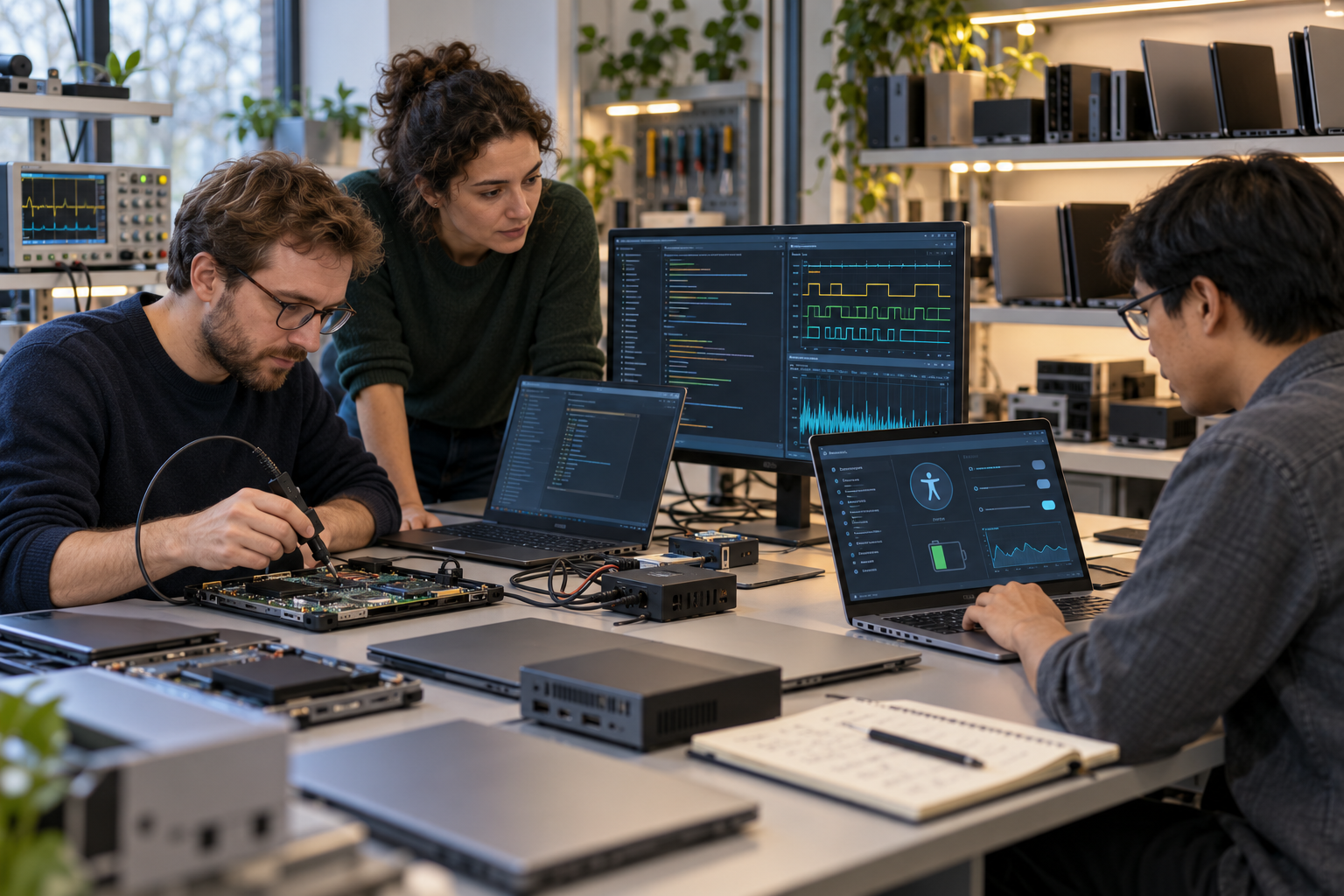
Linux support is similarly more than preinstalling Ubuntu. A well-integrated laptop needs working suspend, battery management, graphics switching, audio, webcams, fingerprint readers, external displays, firmware updates and recovery tools. TUXEDO's drivers, control software and WebFAI installer, Slimbook's Linux-focused configuration, Star Labs' firmware work and NovaCustom's firmware choices represent product work. A generic barebone with an unfamiliar logo and no supported update path would not meet the same standard.
Repair, support and the right buying decision
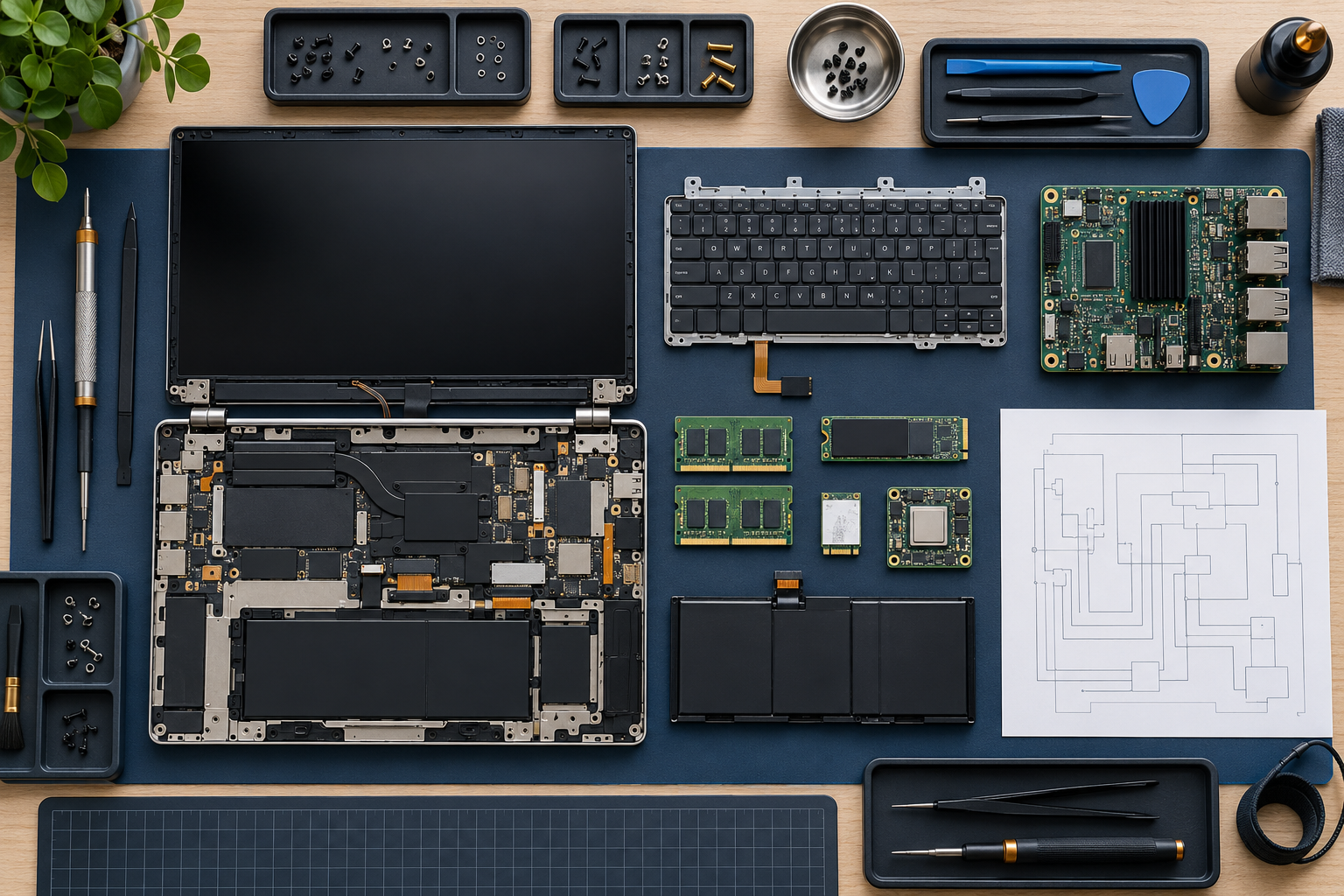
Repairability should be checked as a system. Replaceable memory and storage help, but soldered processors are normal, batteries can be model-specific, keyboards may require large assemblies and a proprietary firmware update can end practical life before the chassis wears out. Ask for service manuals, part numbers, battery and keyboard prices, firmware policy, warranty handling and a route for out-of-warranty repair. MNT makes repair and modification unusually open; NovaCustom publishes a long spare-parts ambition; the conventional vendors offer varying degrees of replaceable components and workshop support.
The best choice begins with workload and support, not nationality. A student may value price, battery life and a local keyboard. A developer may need Linux suspend reliability, multiple external displays and virtualisation. An organisation may need stable images, asset tags, on-site service and a supplier able to quote hundreds of identical units. A security team may prefer measured boot and controlled firmware. An experimenter may accept MNT's learning curve for unusually open hardware. European provenance matters most when the machine also does the job for a long time.
Buying European can keep configuration, diagnostics, repair, software, firmware and customer accountability closer to the user. It can support small engineering teams that upstream Linux fixes, maintain open code or answer directly for a product. It does not automatically reduce carbon impact or make a computer ethical. Longevity, energy use, labour conditions, transport, recycled materials and reuse all matter, and keeping a capable existing computer is often better than replacing it early for a flag.
What remains global—and why honesty matters
Europe's wider semiconductor achievement belongs beside this story. ASML's lithography systems are an extraordinary European capability, while European companies and research organisations contribute power semiconductors, sensors, secure elements, equipment and processor design. Yet an ASML machine in a Taiwanese or Korean fab does not make the finished laptop European. Industrial pride becomes stronger when it names the real contribution and the missing capacity accurately.
Several familiar names are not in the verified core. Acer is Taiwanese; Lenovo-controlled Medion is not European-controlled; Framework, System76 and Purism are American; Fujitsu is Japanese. Other Europe-based sellers may do substantial work but were not promoted to a full profile where current ultimate control or a sufficiently specific production record could not be established from primary public sources. Omission is not an accusation—it is the consequence of a strict evidence threshold.
The European achievement and its next test
The European achievement is therefore plural rather than pure. It is a Berlin team publishing a laptop's design files, Dutch engineers shipping open firmware, Spanish technicians configuring and testing systems, German firms assembling and supporting business machines, British engineers designing accessible small computers, Welsh lines manufacturing boards and users across Europe funding alternatives with their purchases. The same honest method underpins Federal Europa's guides to European smartphones and European bicycles and e-bikes. Europe does not need invented autarky to be proud of capability; it needs to deepen it.
Use the profiles below as provenance records, not permanent certificates. Company control, production partners, models, delivery times and support promises can change. Each page carries a review date and links to the legal register, company documentation and product or support evidence used. Recheck the exact machine and seller before purchase, especially for a long preorder, security-critical deployment or cross-border warranty.
A federal Europe can make this ecosystem easier to grow: one large market, enforceable consumer rights, interoperable procurement, shared research, repair standards, skilled migration and capital that does not force every promising hardware company to leave. Hardware choice also works best with credible European software and office alternatives. The practical goal is not to ban global components. It is to ensure Europeans retain enough design, firmware, manufacturing, service and governance capacity to choose, improve and repair the computers on which public and private life depend.