The short answer: Europe still builds bicycles
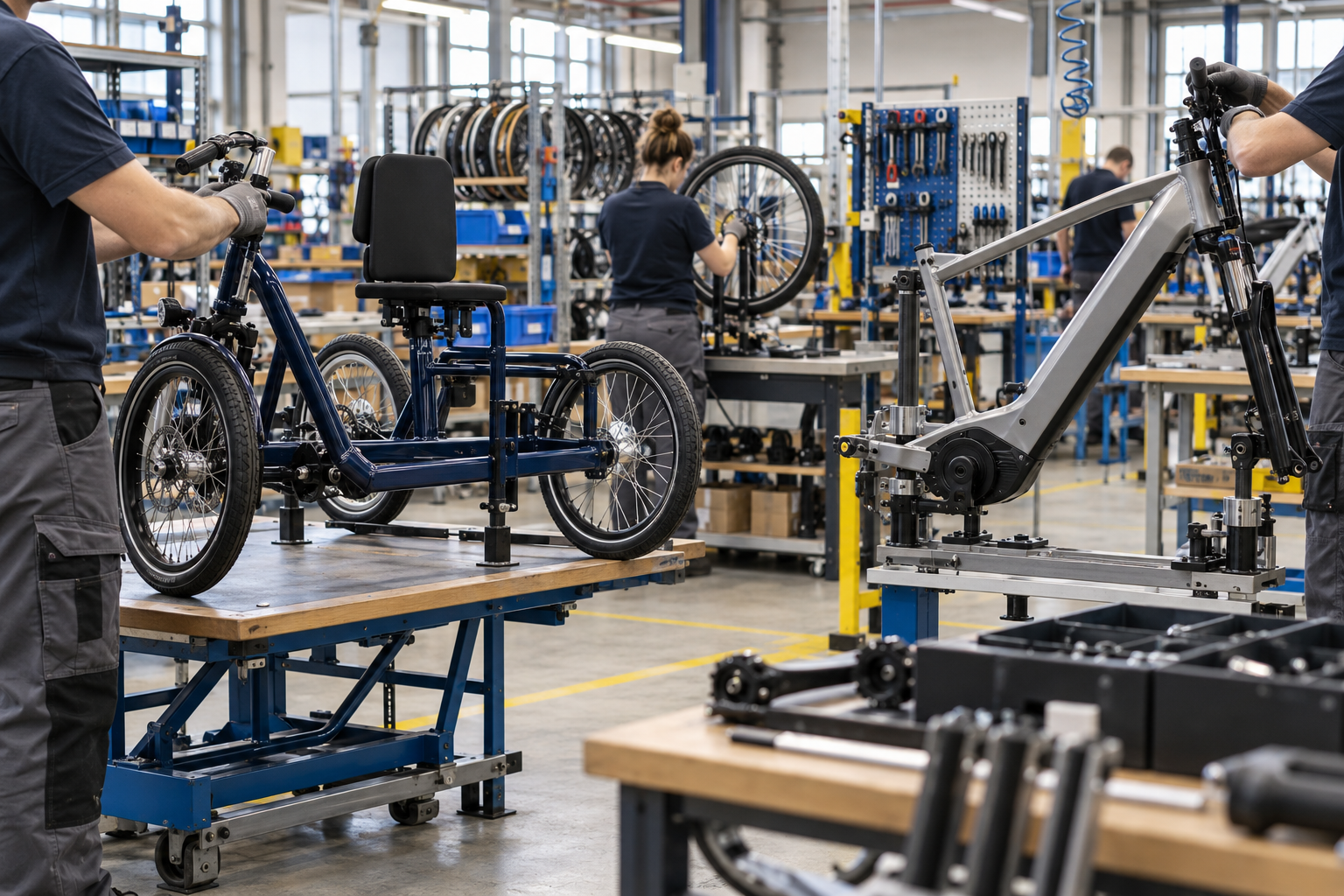
Europe can be proud of the bicycle because it remains both an everyday machine and a living industrial system. The latest European Cycling Industries profile reports 10.82 million bicycles and electrically assisted cycles produced in Europe during 2025, €18.252 billion in sales value and 67,076 direct manufacturing jobs. Those numbers sit behind ordinary achievements: a parent carrying groceries without a car, a worker combining bicycle and train, a disabled rider regaining independent mobility and a factory keeping welding, painting, electronics and repair skills in a region.
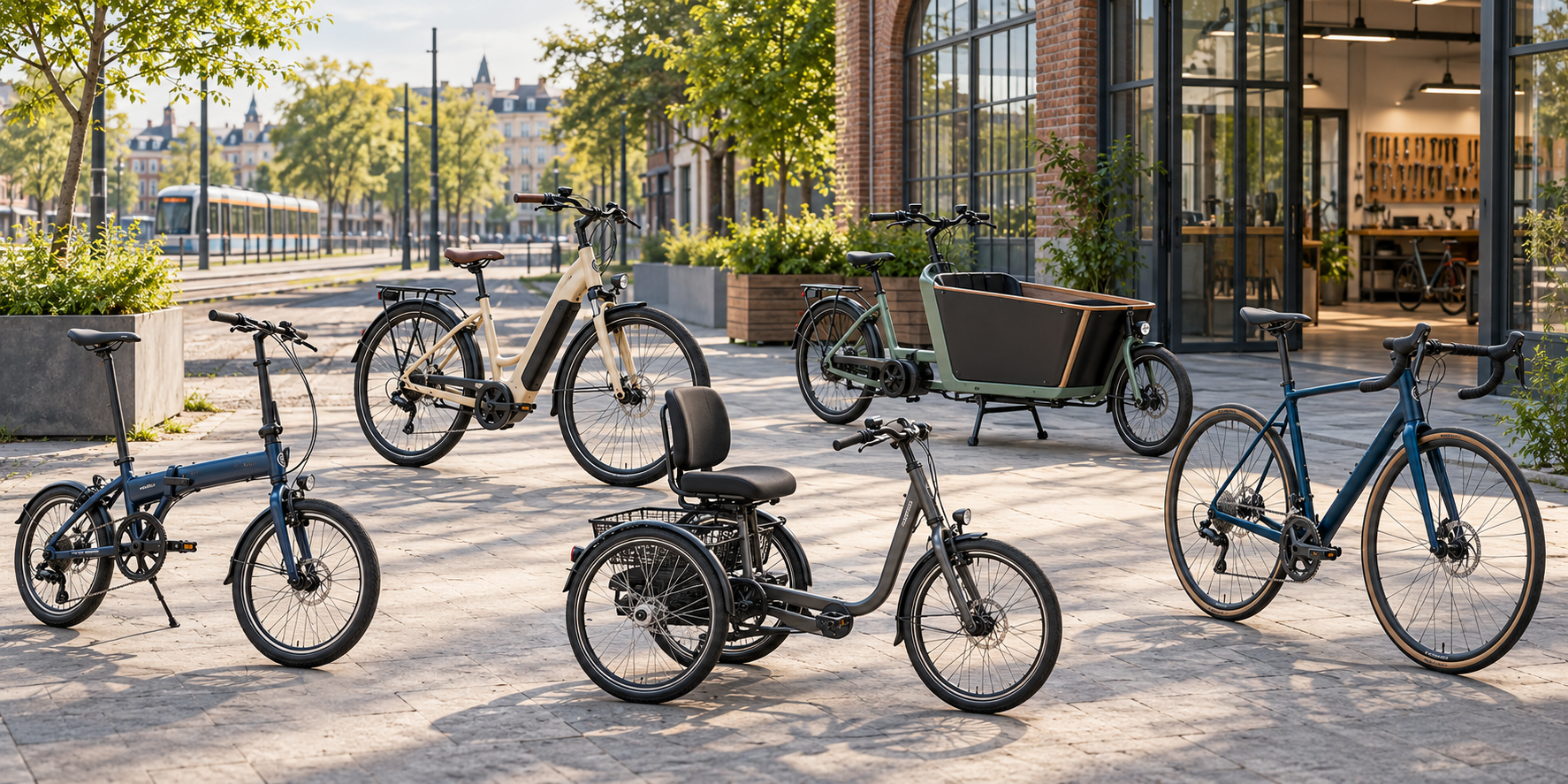
The strongest shortlist is deliberately broad. Brompton turns a British-made folding mechanism into intermodal transport. Spain's Orbea is owned by its workers. Germany's Canyon applies direct sales to performance and everyday bikes, while Riese & Müller builds premium electric and cargo machines around dealer service. Royal Dutch Gazelle industrialises the comfortable city bicycle. Urban Arrow makes the cargo bike a family and business vehicle. Moustache assembles a wide electric range in the Vosges. Brussels-born Cowboy treats software as part of the bicycle. Van Raam builds adapted cycles around individual bodies and abilities.
What counts as a European bicycle
A European bicycle is not one whose every tube, cell, motor, gear and tyre was made inside Europe. Frames, carbon fibre, batteries and components move through global supply chains. Bosch, Shimano, SRAM, Enviolo, Brose, Mahle and many smaller specialists can appear on the same European-designed product. Honest comparison asks where the company is controlled, where engineering happens, who fabricates or paints the frame, where final assembly and quality control occur, and whether parts and service will remain available.
That distinction protects the achievement rather than weakening it. A company that openly imports a Taiwanese frame but designs, tests and assembles the complete bicycle in France is making a different claim from a Dutch factory that welds or paints more of the structure locally. Both can create skilled European work and durable products. Neither should be described as a completely European supply chain unless the evidence supports it.
Choose the job before the brand
The first buying decision is not the brand. It is the job. A compact folder is valuable when stairs, trains, flats and secure indoor storage dominate. A Dutch-style city bicycle prioritises posture, guards, lights, racks and year-round reliability. A cargo bike needs stable handling, a realistic payload, safe passenger equipment and somewhere to park. A performance road or mountain bicycle prioritises fit, weight and terrain. An adapted cycle begins with the rider's balance, movement, transfer and support needs.
What changes with an e-bike
Electric assistance adds another system to own. Check motor behaviour, battery capacity, charger availability, diagnostic access, replacement cost, software dependence and who can repair it locally. A famous motor badge does not guarantee that every dealer can diagnose the complete bicycle. Conversely, a proprietary system can ride beautifully while increasing dependence on one company, application or cloud service. Ask what still works if a phone, subscription or network is unavailable.
Cargo bikes as European transport products
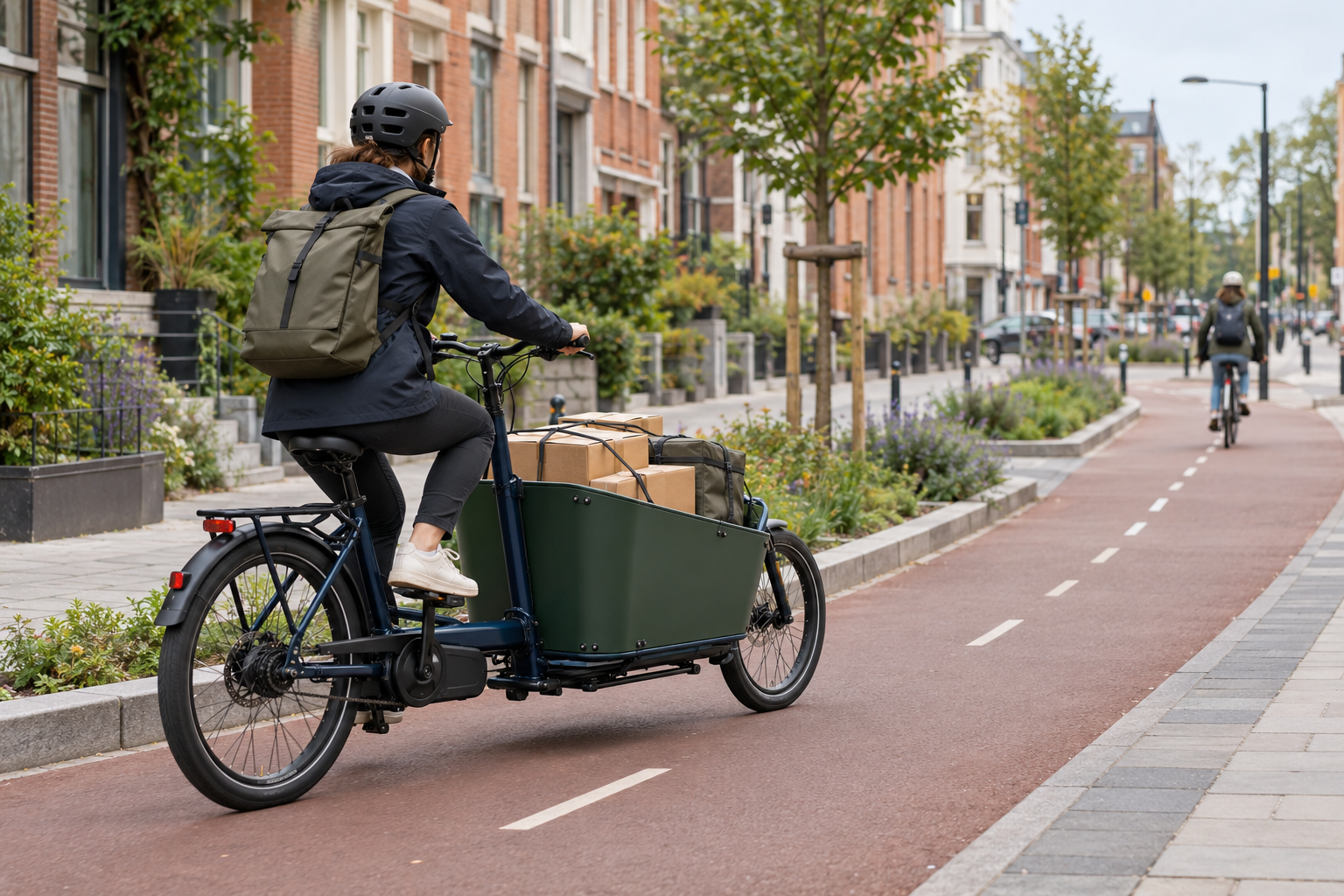
Europe's cargo-bike achievement is especially visible. Urban Arrow, Riese & Müller, Gazelle and other manufacturers have turned a niche frame into a serious family and logistics category. The result is not a universal car replacement: hills, weather, theft, disability, distance and road danger matter. But a well-matched cargo bike can move children, shopping, tools or parcels using far less street space and energy than a van.
The European Declaration on Cycling recognises cycling as sustainable, accessible and affordable transport with economic value. It commits European institutions and governments to safer networks, public-transport integration, parking, charging, repair, circularity, production and skills. Product and infrastructure belong together: even the best bicycle cannot compensate for a dangerous junction, and a protected network is more useful when people can buy and maintain suitable cycles.
Company stability, ownership and support
Ownership and business stability need the same scrutiny as frame material. Cowboy's design and software remain European achievements, but the company entered a restructuring with ReBirth after delivery, spare-parts and recall problems; its current official updates describe recovery work rather than a finished turnaround. Ampler is not given a buying profile here because its own current owner guide says insolvency proceedings have affected warranties, parts and services. Review dates matter in a market that has recently experienced both extraordinary demand and a painful correction.
Fit, service and real-world testing
Service should influence the shortlist before colour or screen size. Dealer-led brands can provide fitting, assembly and warranty diagnosis close to home, but the network varies by country. Direct-sales brands can offer strong specifications and clear online ordering, but the buyer may have to unpack, adjust or ship components. A bicycle using standard tyres, chains, pads, bearings and gears is easier to keep alive than one whose essential parts exist only inside a closed catalogue.
Fit is safety, comfort and efficiency. Published size charts are a starting point, not proof. Test the mounting movement, reach, hand pressure, saddle position, steering at low speed, loaded braking and the exact luggage or passenger configuration. For an adapted cycle, involve an experienced dealer, therapist or fitter and practise in a protected space. For a cargo bike, test it loaded: an empty demonstration ride can hide the handling that matters.
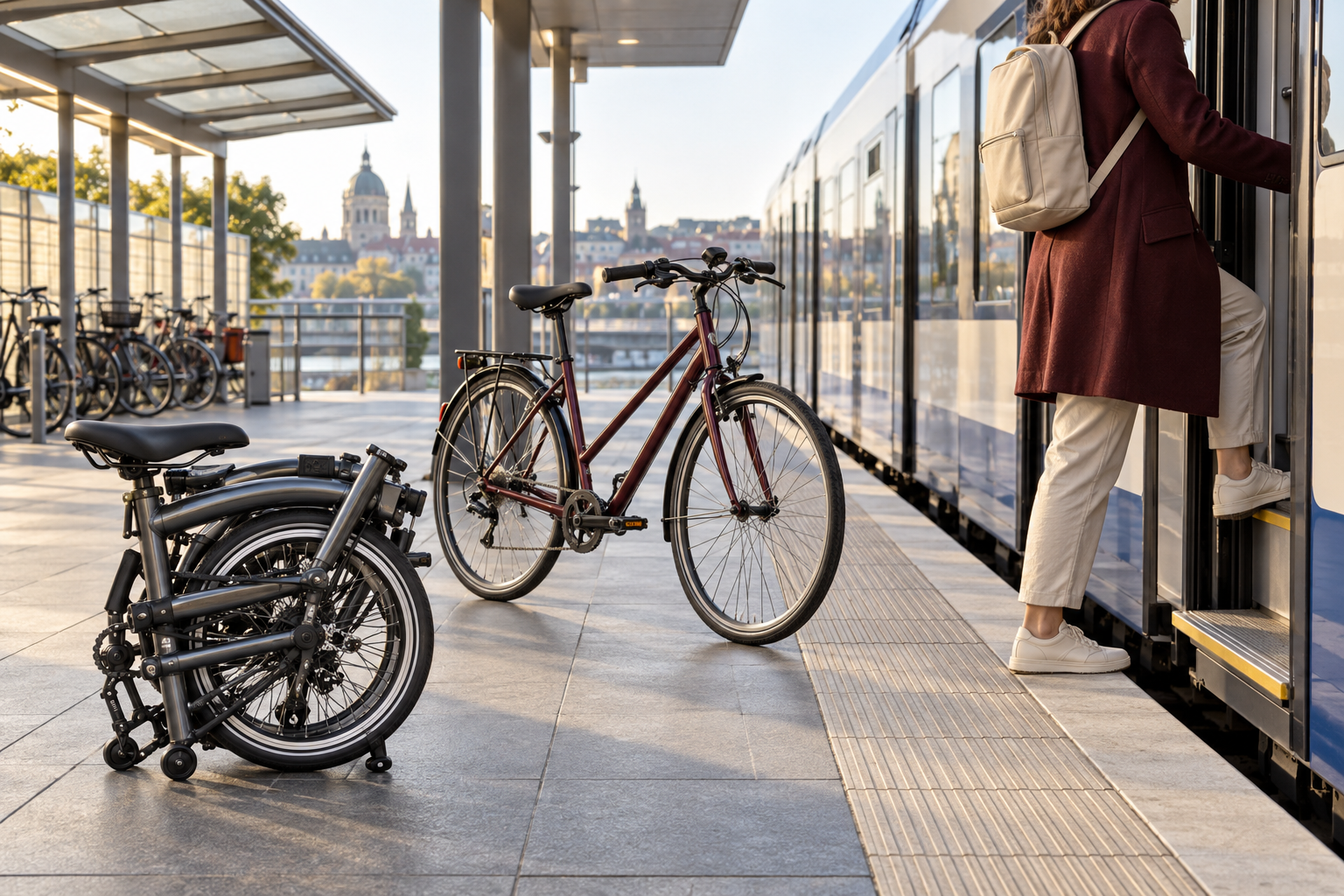
A folding bicycle also needs a real journey test. Measure the folded package, carry it up the actual stairs, check whether rolling wheels work on the station surface and confirm the operator's bicycle rules. EU rail law requires railway undertakings to facilitate bicycle carriage where appropriate, but reservations, capacity, charges, dimensions and disruption arrangements still differ by service. A folder that is treated as luggage can be useful, but only the operator's current terms decide.
Why this is a Proud Europe achievement
The strongest European story is diversity backed by productive capacity. Europe builds race machines, practical commuters, connected e-bikes, cargo vehicles and cycles for people whom standard bicycle design excludes. It also provides component engineering, dealer networks, leasing, public-bike systems, standards and urban design. The market's next test is to make batteries, software, parts and repair as durable as the frames—and to keep cycling accessible beyond premium buyers.
Choose a European bicycle because it fits the journey and because the company can support it, not because a flag substitutes for evidence. European ownership, assembly or engineering is a meaningful positive when it preserves skills, responsibility and choice. It becomes more meaningful when the product is safe, repairable, honestly described and used for many years.
This guide is evergreen by design. Its title does not contain a calendar year; the visible review date shows when ownership, production, availability, warranty and support claims were checked. Readers should use the linked official sources for the exact model, country and purchase date.