The short answer: Europe has real smartphone choices
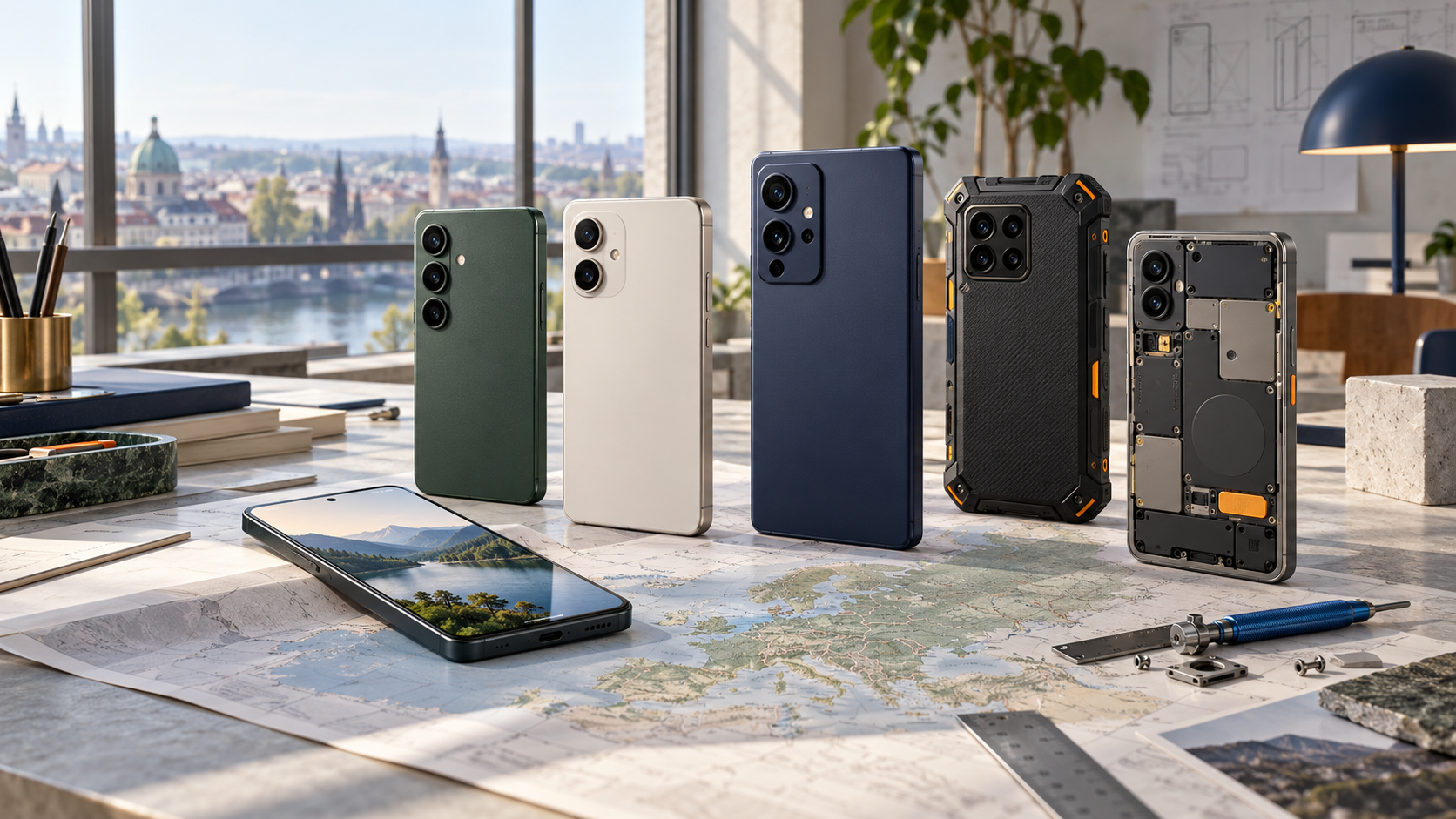
Yes, European smartphones exist. The strongest current shortlist includes Dutch Fairphone, Finnish HMD and Jolla, London-based Nothing, German SHIFT and Volla, French Murena and Crosscall, and Finland's specialist Bittium. They are not interchangeable. Some sell ordinary Android phones, some make repairability the product, some replace Google's software layer, and some are built for field workers or government-grade security rather than the mass market.
What counts as a European smartphone
The phrase <em>European smartphone</em> needs a precise definition. This guide includes companies headquartered and substantially directed in Europe, then states where their distinctive European contribution sits: ownership, industrial design, operating-system engineering, final assembly, repair policy, professional integration or security architecture. It does not imply that processors, displays, cameras, memory, radio components and every factory are European. Modern phones use global supply chains, including American chip designs and extensive Asian manufacturing.
Repairable phones: Fairphone, SHIFT and HMD
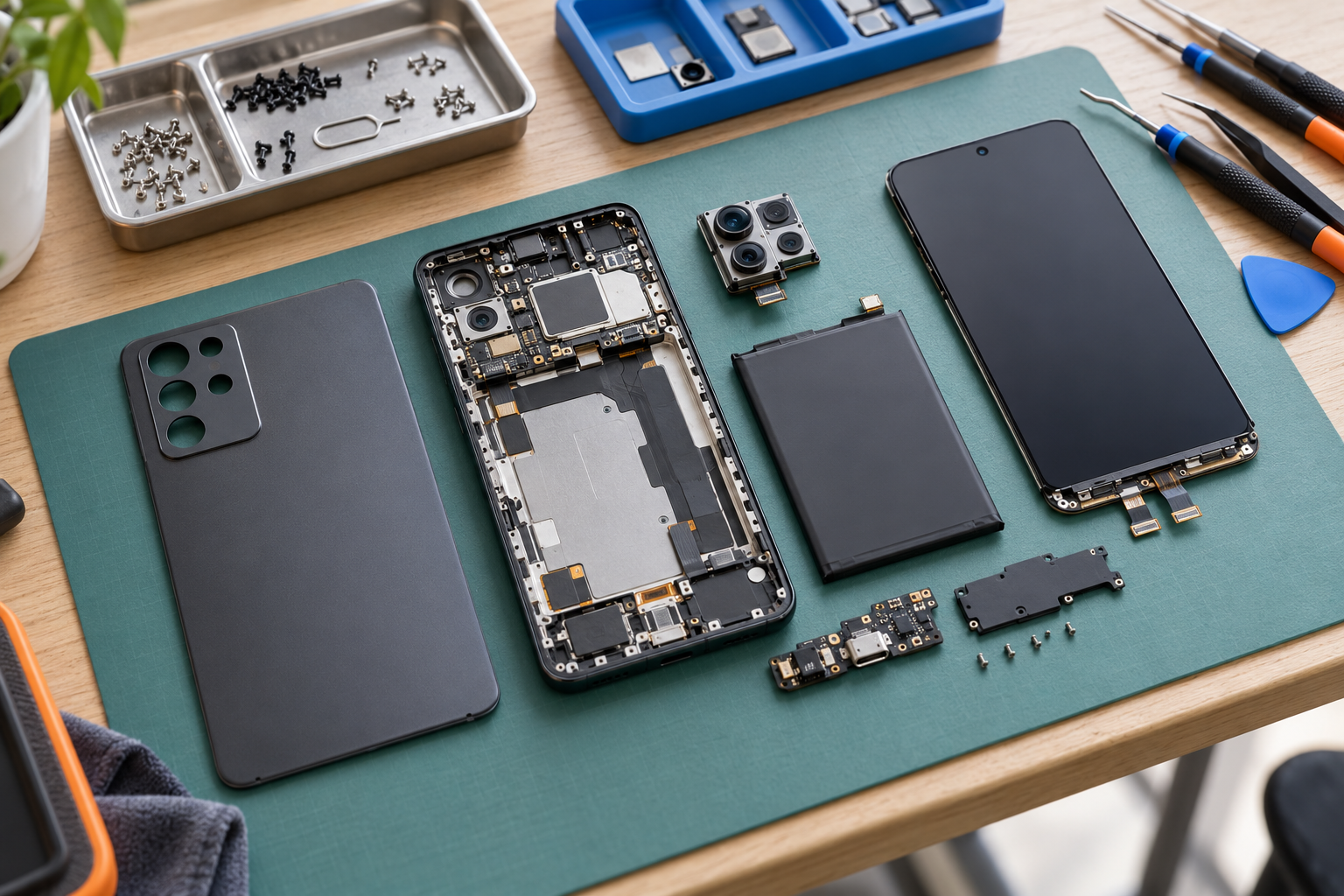
For most buyers, Fairphone is the clearest repair-first option. The Dutch company sells a modular Android phone with a removable battery, replaceable modules, spare parts and software support promised into the next decade. Germany's SHIFTphone follows a similar but smaller path with modular construction, a universal removable battery, hardware switches and a device deposit. HMD, headquartered in Finland, brings European scale and publishes self-repair material for selected phones. These are different levels of repairability, not one common badge.
A repairable phone is not automatically the lowest-impact purchase. Keeping a working phone for another year can avoid more production than replacing it early with an ethical model. When a replacement is necessary, compare the EU repairability class, battery endurance, update period, spare-part prices, repair instructions and warranty terms. A modular design helps only if the parts remain obtainable and the software remains safe.
Mainstream consumer choices: HMD and Nothing
HMD and Nothing are the most conventional consumer choices in this list. HMD markets Android smartphones and feature phones under its own name from a Finnish base, with some products designed for user repair. Nothing is incorporated in England and Wales, designs its hardware and Nothing OS from a London-centred business, and competes more directly on camera, performance and industrial design. Both depend on Android and global component and manufacturing networks; neither is a European mobile operating system independent of Google.
Fairphone, HMD and Nothing therefore answer a different question from Jolla, Volla and Murena. The first group can suit someone who wants familiar Android applications with a European company behind the product. The second group is more relevant when the operating system, Google dependence, open-source pathway or institutional control matters. Buyers should decide which layer they are trying to make European before comparing specifications.
Alternative operating systems: Jolla, Volla and Murena
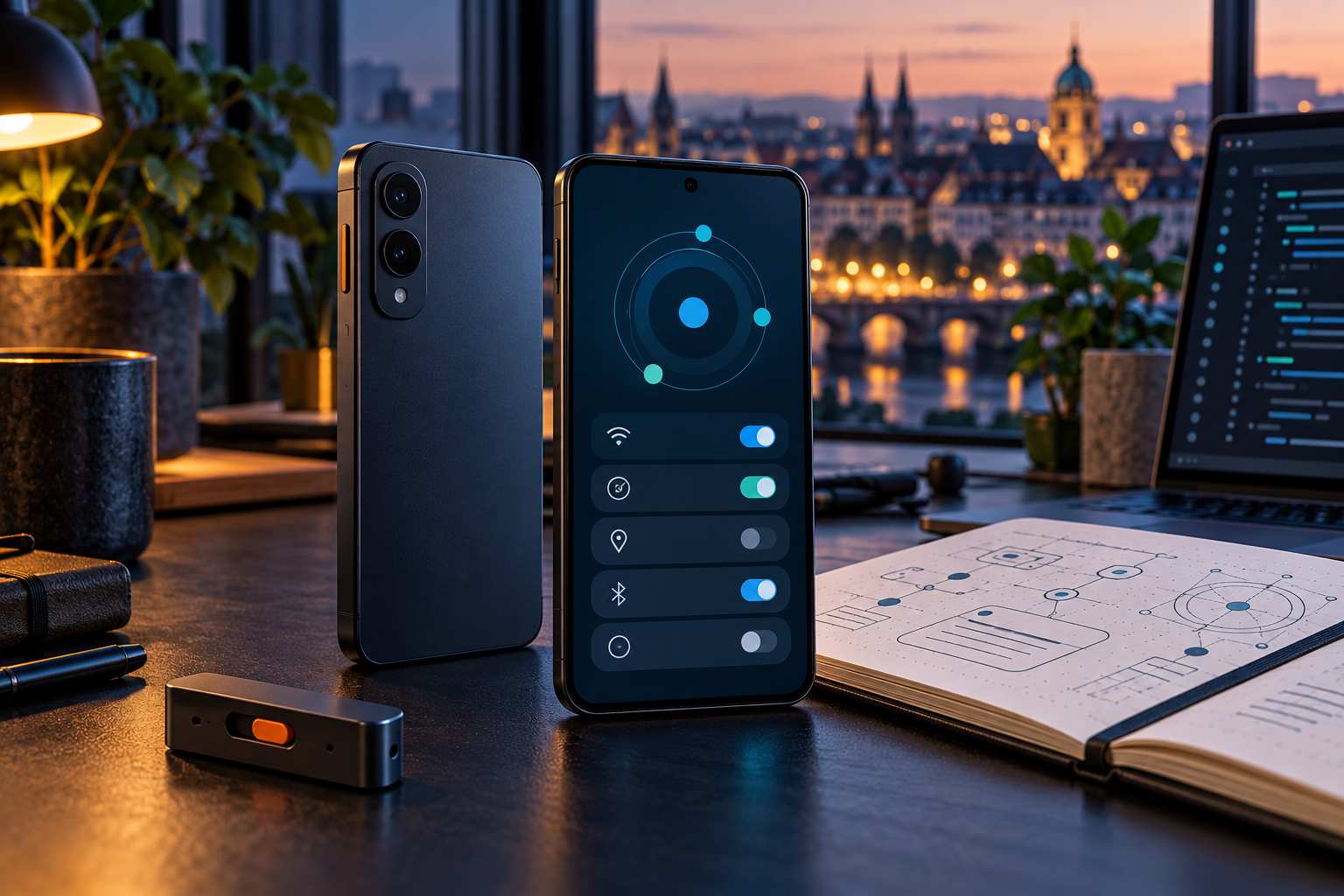
Finland's Jolla maintains Sailfish OS, a Linux-based mobile platform with an Android-application compatibility layer. Germany's Volla offers its Google-free Volla OS, based on the Android Open Source Project, as well as Ubuntu Touch and multi-boot on supported devices. France's Murena develops and sells phones with /e/OS, a de-Googled Android-derived system with its own services and app catalogue. These projects retain valuable European software knowledge and create meaningful choice beyond stock Google Android.
Alternative mobile software also creates friction. A banking, identity, workplace, streaming or transport app can require Google Play services, device certification, digital-rights management or a security check that an alternative system does not satisfy. Camera processing, battery optimisation and accessibility can differ from the original hardware software. A privacy promise should therefore be tested with the exact essential apps, network, eSIM, payments, assistive technology and update channel the buyer will use.
Rugged and secure phones: Crosscall and Bittium
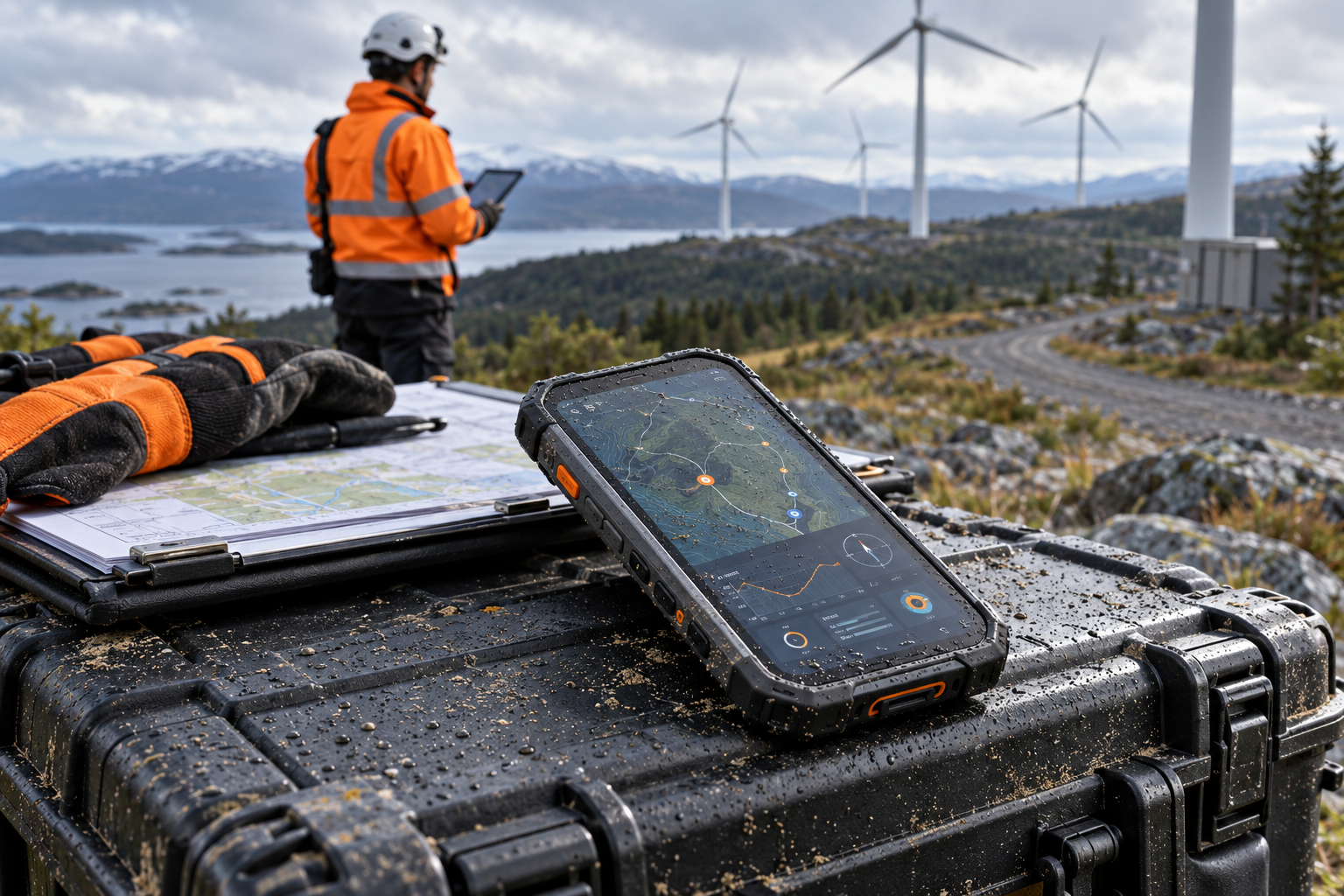
Crosscall and Bittium show why a single consumer ranking would be misleading. Crosscall designs rugged, waterproof Android phones in Aix-en-Provence for outdoor users, field workers and large organisational deployments, with long warranties and accessories. Bittium designs and manufactures the Tough Mobile 2 in Finland for security-sensitive professional and government contexts, adding tamper detection, a secure element and a hardware privacy mode. A device optimised for mission assurance can look modest beside a consumer flagship because its priorities are different.
European also extends beyond the EU. Nothing is British and Punkt, which is not profiled here because its current smartphone proposition and availability need a clearer retail baseline, is Swiss. This guide labels geography rather than quietly treating Europe and the EU as synonyms. It also excludes a famous European name when the current product is not controlled by the old company: a licensed brand, nostalgic badge or local distributor is not enough by itself to establish European smartphone ownership.
Availability, support and the buyer's checklist
Price and availability are moving facts. Small makers may sell in batches, through crowdfunding or in limited countries. A listed phone can lack the radio bands, carrier certification, warranty route, language support or local repair channel a buyer expects. Even large brands vary their range by market. Every profile therefore links the official product, support and company pages and states the review date rather than presenting a permanent catalogue.
For an ordinary buyer, start with five questions: Will every essential app work? How long are security updates promised? Can the battery, screen and charging port be repaired at a sensible price? Does the exact model support the local network and eSIM needs? Who handles warranty service in the buyer's country? Only then compare camera, display, storage, charging and design.
For a public body or business, add mobile-device management, Android Enterprise status, update cadence, procurement continuity, audit evidence, data-processing roles, secure communications and fleet repair. European ownership can improve jurisdictional clarity and local supplier relationships, but it is not a substitute for a threat model, contractual service levels or independent security assessment.
Why European smartphone capability matters
Europe's smartphone achievement is not that it has recreated every layer of the iPhone or Android supply chain. It is that several European companies still design hardware, maintain mobile operating systems, publish repair paths, build specialist secure devices and challenge the assumption that phones must be sealed, disposable or tied to one platform. Those capabilities deserve confident support—and precise claims.
The strategic next step is scale without losing distinction. Europe needs longer software support, stronger component and semiconductor capacity, reliable repair logistics, interoperable public services, app compatibility and procurement that values lifetime cost. A federal European market can help a good design reach hundreds of millions of people while common rules raise durability for every brand sold here.