A common safety language for European rail
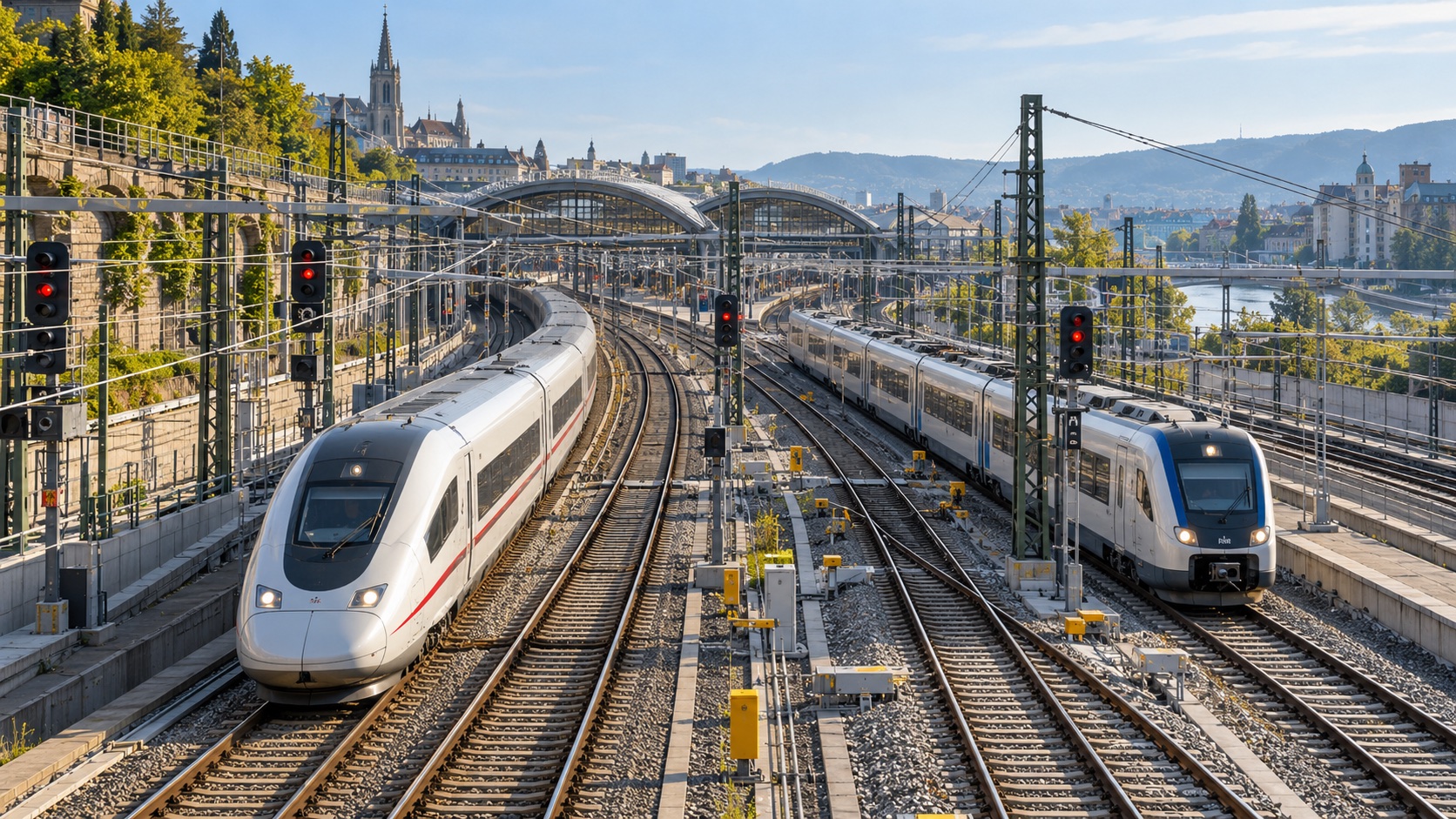
Europe built one digital language for trains. The European Rail Traffic Management System, or ERTMS, replaces a landscape of incompatible national signalling and automatic train-protection systems with shared specifications for controlling speed, communicating movement authority and operating safely. It is not a railway company or one control room for the continent. It is the common technical grammar that lets national networks and competing suppliers build toward interoperability.
That is a major European achievement because rail borders are unusually stubborn. A locomotive can have the correct gauge, electrical equipment and route approval yet still need different onboard signalling systems for neighbouring countries. Every extra national system adds equipment, testing, driver knowledge, certification and maintenance. Europe did not solve that problem by asking every country to buy one manufacturer's proprietary railway. It created open, legally referenced specifications that many infrastructure managers, operators and suppliers can implement.
What ERTMS, ETCS and railway radio do
ERTMS has three practical layers. The European Train Control System, or ETCS, supervises train movement and speed. Railway mobile radio carries operational voice and data, today mainly through GSM-R and increasingly through the future FRMCS framework. Common operating rules connect the technology to the people who drive, dispatch, authorise and maintain trains. The European Union Agency for Railways acts as the system design authority, maintaining specifications with the sector and managing change so that one improvement does not casually break earlier investments.
ETCS is the safety-critical core. Trackside equipment and control centres provide information about the route ahead; the onboard unit combines that information with train and braking data, calculates a safe speed profile and shows the driver what is permitted. If the train approaches a limit too quickly, the system warns and can intervene with the brakes. The exact architecture depends on the application, but the common promise is clear: a train and a line designed to the compatible European specifications should understand the same safety language.
Level 1 installations can transmit movement information through track-mounted Eurobalises and may work alongside lineside signals. Level 2 normally uses continuous radio communication for movement authority with cab signalling, while balises still provide fixed reference points. Automatic Train Operation can sit above the protection layer in supported configurations. These labels describe technical architectures, not a simple quality ranking: a safe deployment must fit the route, rolling stock, traffic and migration plan.
A living standard with European system authority
The standards are not frozen in the 1990s. The current European Union Agency for Railways page identifies the 2026 control-command and signalling update, Commission Implementing Regulation (EU) 2026/693, and mandatory specifications including ETCS Baseline 4 Release 1, Automatic Train Operation Baseline 1 Release 1, the maintained GSM-R baseline and an initial FRMCS baseline. Europe is therefore managing a living digital system while protecting compatibility with trains and infrastructure already in service.
That governance is part of the accomplishment. A signalling standard must survive longer than an ordinary software product, yet it also has to absorb cybersecurity needs, radio evolution, automation and lessons from operation. ERA's change-control process gives infrastructure managers, operators, manufacturers and safety experts one accountable place to develop the system. The goal is stable interfaces and controlled evolution rather than 27 separate upgrade cycles that recreate fragmentation under digital names.
The 2030, 2040 and 2050 deployment commitments
The legal commitment is now continental in scale. Regulation (EU) 2024/1679 requires ERTMS on the TEN-T core railway infrastructure by the end of 2030, on the extended core network by the end of 2040 and on the comprehensive network by the end of 2050, with specified exceptions and conditions. It also sets staged deadlines for decommissioning national Class B systems—2040 on the core, 2045 on the extended core and 2050 on the comprehensive network—and requires radio-based ERTMS across those networks by 2050.
Those deadlines matter because a common standard delivers its full value only when both track and trains are ready. Equipping a corridor without enough compatible locomotives creates an expensive island; fitting trains while the relevant routes retain legacy systems requires duplicate equipment. The law explicitly calls for synchronised and harmonised deployment trackside and onboard. Europe has learned that interoperability is a programme of coordinated migration, not a sticker placed on one component.
Funding and a real corridor under construction
European funding turns that legal direction into projects. The Connecting Europe Facility for Transport has €25.8 billion for 2021–2027 across transport infrastructure, including cross-border links, bottlenecks, safety and traffic-management systems. In the Commission's July 2025 CEF selection, 32 projects in 11 member states were chosen to implement ERTMS on trains and tracks. That figure belongs to one funding round rather than the whole deployment, but it shows a shared budget backing the shared standard.
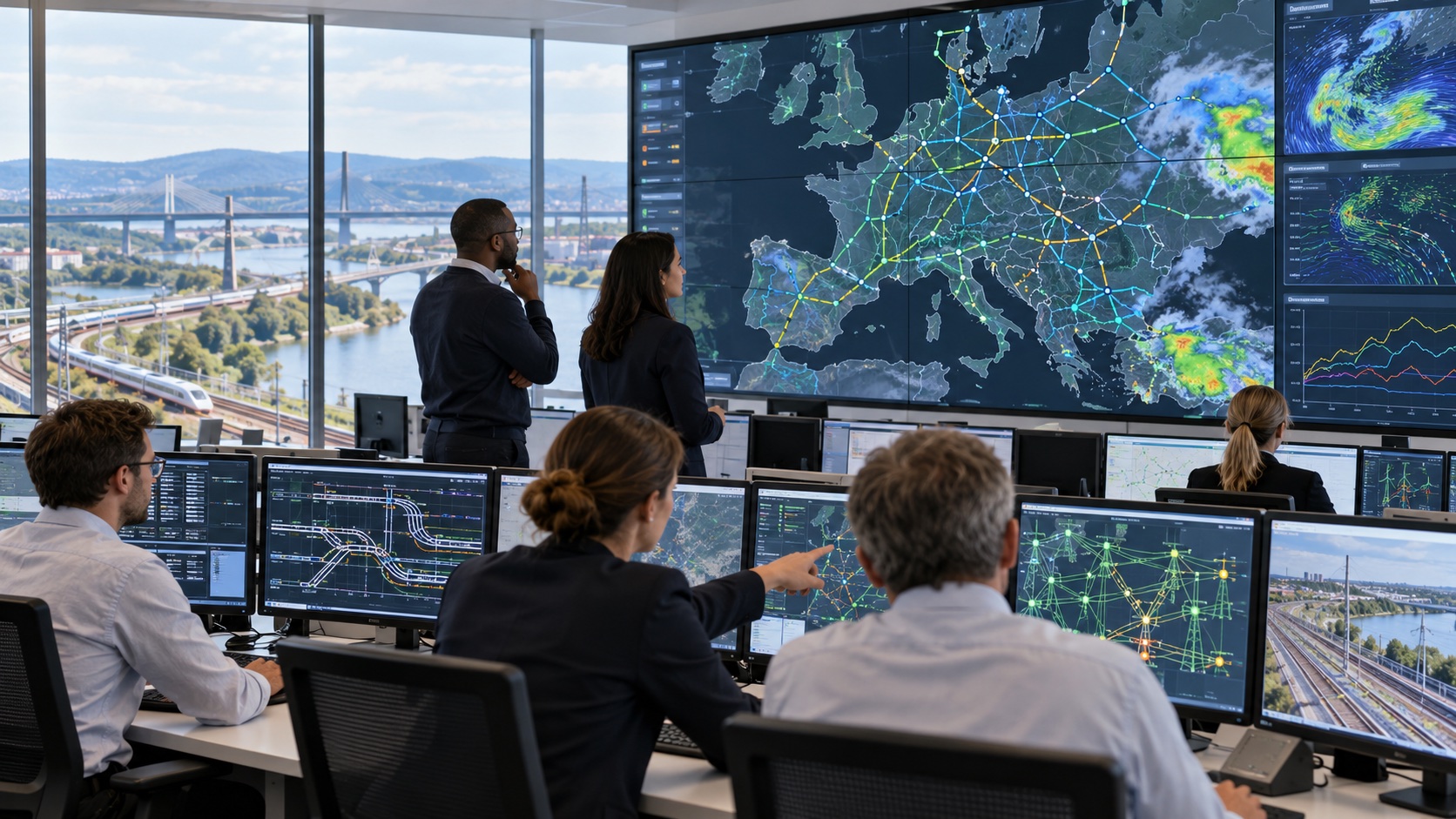
Rail Baltica makes the ambition tangible. The new approximately 870-kilometre standard-gauge line through Estonia, Latvia and Lithuania is designed with ERTMS Level 2 and an intended connection toward Poland and the wider European network. CINEA's February 2026 project record says mainline works are under way in all three Baltic states and describes a goal of opening the first-phase north–south connection by 2030. It is a construction programme in progress, not a finished railway, but interoperability is being designed into the line rather than added after the border crossings exist.
What passengers, freight and capacity gain
ERTMS can also increase capacity where the infrastructure and operating design use it well. More precise and continuously communicated movement information can support shorter safe separations than older fixed-block arrangements, higher usable speed and more predictable traffic management. Cab signalling becomes essential where a driver cannot reliably read trackside signals at speed. The system does not create a new track or remove every bottleneck, but it helps existing and new infrastructure carry trains with a common safety discipline.
For freight, the strategic gain is straightforward: a locomotive that can cross more networks with one interoperable train-control system needs fewer national equipment packages and less operational friction. For passengers, the effect is quieter but important. A night train or high-speed service can be planned across borders with fewer signalling incompatibilities. The EU train passenger-rights guide explains what happens when a journey fails; ERTMS addresses a different layer—the infrastructure that should make cross-border operation easier to run in the first place.
The project grows from a wider European talent for common technical systems. GSM showed that shared spectrum, standards and operator commitment could turn incompatible national networks into a global platform. GSM-R adapted that family of technology for rail's operational needs. EUROCONTROL demonstrates the same institutional instinct in the sky: national services remain, while shared data, rules and coordination make a continental network usable.
The move from GSM-R to FRMCS
Rail radio now faces its own generational handover. ERA says suppliers have indicated support for GSM-R technology and products at least until 2030, while the Future Railway Mobile Communication System is being developed to carry rail into 5G-era communications. The 2026 technical framework includes an initial FRMCS baseline, but migration will take time. Networks must protect current operations, find spectrum, validate safety and cybersecurity, equip trains and track, and manage a period when old and new radio systems coexist.
Cybersecurity is therefore not an optional appendix. Digital train control, radio links, cryptographic keys, software baselines and remote maintenance expand what must be protected throughout a long asset life. Common specifications create a stronger basis for coordinated security and patching, but commonality can also concentrate risk if weaknesses are not handled carefully. Europe needs clear responsibility between ERA, national safety authorities, infrastructure managers, railway undertakings and suppliers, plus the skills to operate the system rather than only install it.
Costs, delays and the limits of signalling alone
Deployment has been slower and more expensive than early European plans implied. Legacy equipment cannot be switched off until a safe replacement and compatible fleet are ready. National project pipelines, procurement capacity, engineering possessions, approval work and business cases differ. Multiple ETCS baselines and country-specific functions have also complicated the ideal of a train that simply works everywhere. These are material limits, but they are migration problems inside a functioning common framework—not evidence that Europe failed to create the framework.
Interoperability also depends on more than signalling. Track gauge, electrification, loading gauge, platform length, border procedures, train paths, language and operating rules, rolling-stock availability, ticketing and commercial demand can still block a service. The shared electricity-grid story offers a useful parallel: one connected system makes cross-border capacity possible, but planning, investment and national execution decide how much of that capacity people can actually use.
Why this is a European achievement
Europe should be proud of ERTMS precisely because it is difficult. Countries with long railway histories, different safety systems and powerful incumbent industries chose to define a shared public architecture, entrust a European agency with system authority, require deployment in law and finance the transition. Engineers turned political interoperability into braking curves, radio messages, balises, driver displays, certification rules and migration plans. That is European cooperation at its most concrete.
The next test is delivery. Core routes need the 2030 installations, fleets need compatible onboard equipment, Class B systems need credible retirement plans and FRMCS needs a safe transition from GSM-R. A democratic federal Europe would treat this as common infrastructure: publish comparable progress, coordinate corridors rather than isolated projects and fund the places where the network value exceeds one country's immediate return. One railway language already exists. Europe now has to make it the ordinary language of the whole network.