Europe built a continental home for uncertain ideas
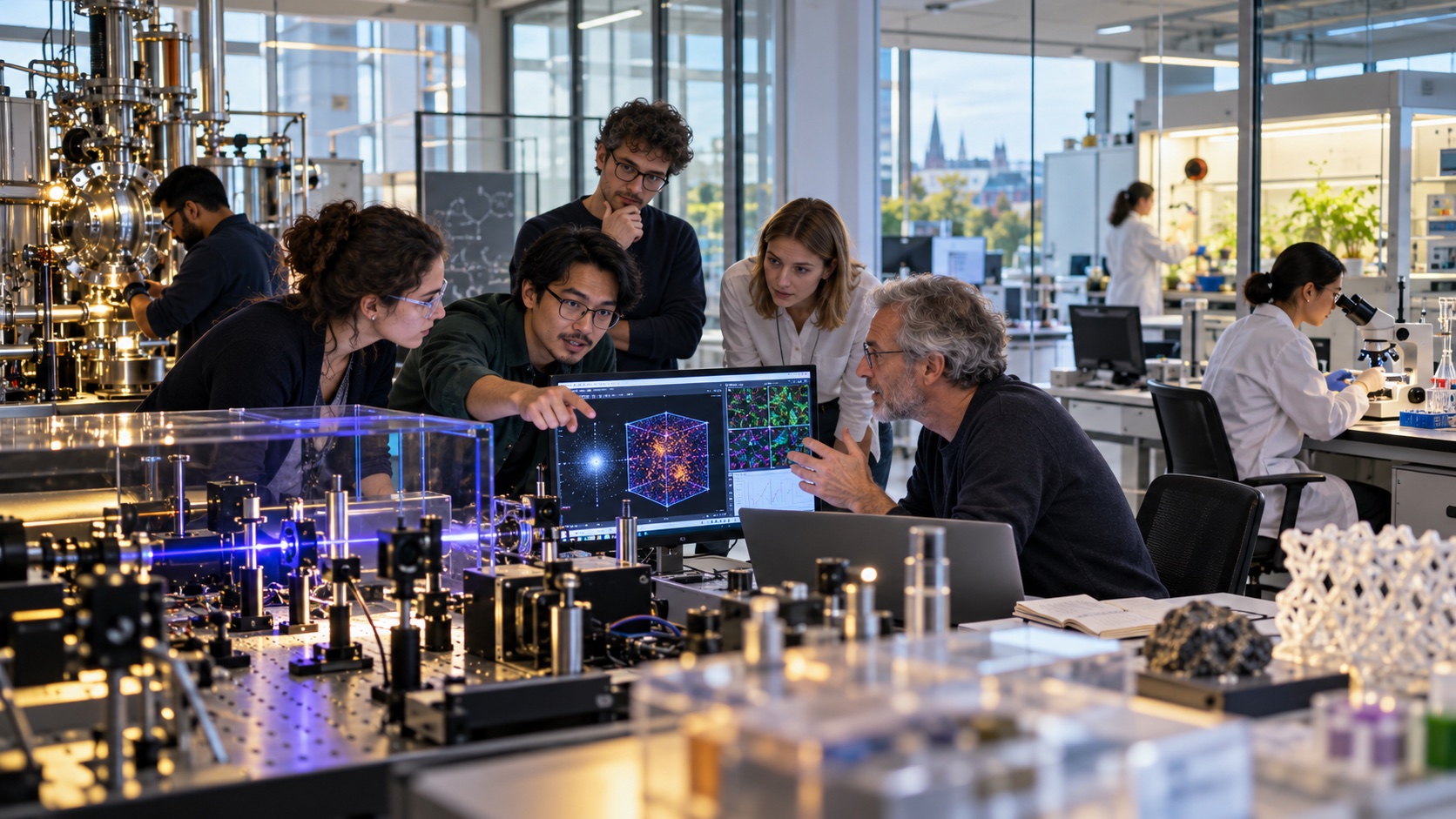
Europe should be proud of the European Research Council because it funds the most difficult part of innovation: the moment before a result is obvious, a market exists or a ministry can specify the answer in advance. The ERC lets researchers propose questions from any field, subjects them to international peer review and gives successful investigators substantial, long-term resources to pursue the work at a host institution in an EU member state or a country associated with the programme.
That sounds like an ordinary grant agency only because Europe made the model credible. When the ERC began under the EU's Seventh Framework Programme in 2007, it became the first pan-European funding body dedicated to frontier research. Its competitions sit above national funding systems rather than replacing them. A mathematician, historian, physicist, computer scientist, engineer, economist or biomedical researcher can ask to be judged in one European competition whose central question is the excellence and ambition of the proposed research.
The scale now matters. The ERC's current overview assigns it more than €16 billion for 2021–2027, about 17% of Horizon Europe's budget. Since 2007, the ERC says it has funded more than 18,500 projects and over 10,000 researchers, evaluated more than 140,000 proposals and supported teams in more than 850 host institutions. Those figures will continue to change. They describe a durable European system, not a one-off prize fund or a collection of unrelated national calls.
Scientific governance and bottom-up grant schemes
The design begins with scientific autonomy. The ERC Scientific Council—scientists and scholars appointed through an independent identification process—sets the scientific strategy and annual work programme, monitors peer review and protects quality. The European Commission formally adopts the work programme, while the European Research Council Executive Agency runs calls, evaluation, grant agreements and day-to-day administration. Political institutions provide the legal authority and budget; scientific governance decides how frontier-research competition works.
Research topics are bottom-up. There is no list telling applicants that this year's acceptable discovery must concern one favoured technology, disease or sector. Starting, Consolidator and Advanced Grants support investigators at different career stages; Synergy Grants let two to four principal investigators combine capabilities for a problem one leader cannot solve alone. Proof of Concept grants help existing grantees examine whether a result has commercial or societal potential without rewriting the original frontier project as a product promise.
In 2026, Europe added the ERC Plus pilot for exceptionally ambitious work beyond the scale of the established schemes. The first competition offers up to €7 million for as long as seven years and expects around 30 awards from a €210 million allocation. That is a live competition, not 30 completed breakthroughs. Its importance lies in the willingness to give a small number of outstanding ideas time, team and equipment at a scale difficult to assemble from short, fragmented grants.
Global talent, European hosts and portable independence
Eligibility makes the achievement European without making it inward-looking. Researchers of any nationality can apply, and team members can come from anywhere. The centre of gravity is the host institution in an EU member state or associated country, which must give the principal investigator appropriate conditions to lead the work and manage the budget. Additional support can help a researcher move a laboratory or team from outside Europe. Europe strengthens its own knowledge base by inviting the world to build inside it.
Portability gives the investigator leverage. ERC guidance says a grant can, with approval and justification, move to another eligible European host when that is useful for the project. The money is awarded through the host institution, but it is tied to the principal investigator's research leadership rather than becoming an institutional possession. This helps the grant improve working conditions across universities and institutes: a host must offer genuine independence if it wants to attract or retain the researcher.
Peer review, competition and changing rules
Evaluation is the heart of legitimacy. International panel members and specialist remote reviewers assess eligible proposals, with scientific excellence as the sole criterion for the main schemes. Panels examine the ground-breaking nature and ambition of the project together with the investigator's intellectual capacity and ability to execute it. Proposals that pass the quality threshold are ranked, and the budget line determines how far down the ranking awards can go. A high-quality proposal can therefore remain unfunded; excellence-only competition does not mean unlimited money.
The process also has to evolve. For 2026 calls, the ERC separated a concise first-stage case for the idea from the detailed methodology and feasibility assessment at the second stage. The 2027 work programme broadens Starting and Consolidator eligibility windows and limits applicants to one proposal under that programme, partly in response to diverse career paths and application pressure. In March 2026, the Scientific Council also barred reviewers from using AI systems to summarise, assess or draft evaluations from confidential proposals, keeping responsibility with the human reviewer.
Teams, outputs and shared research infrastructure
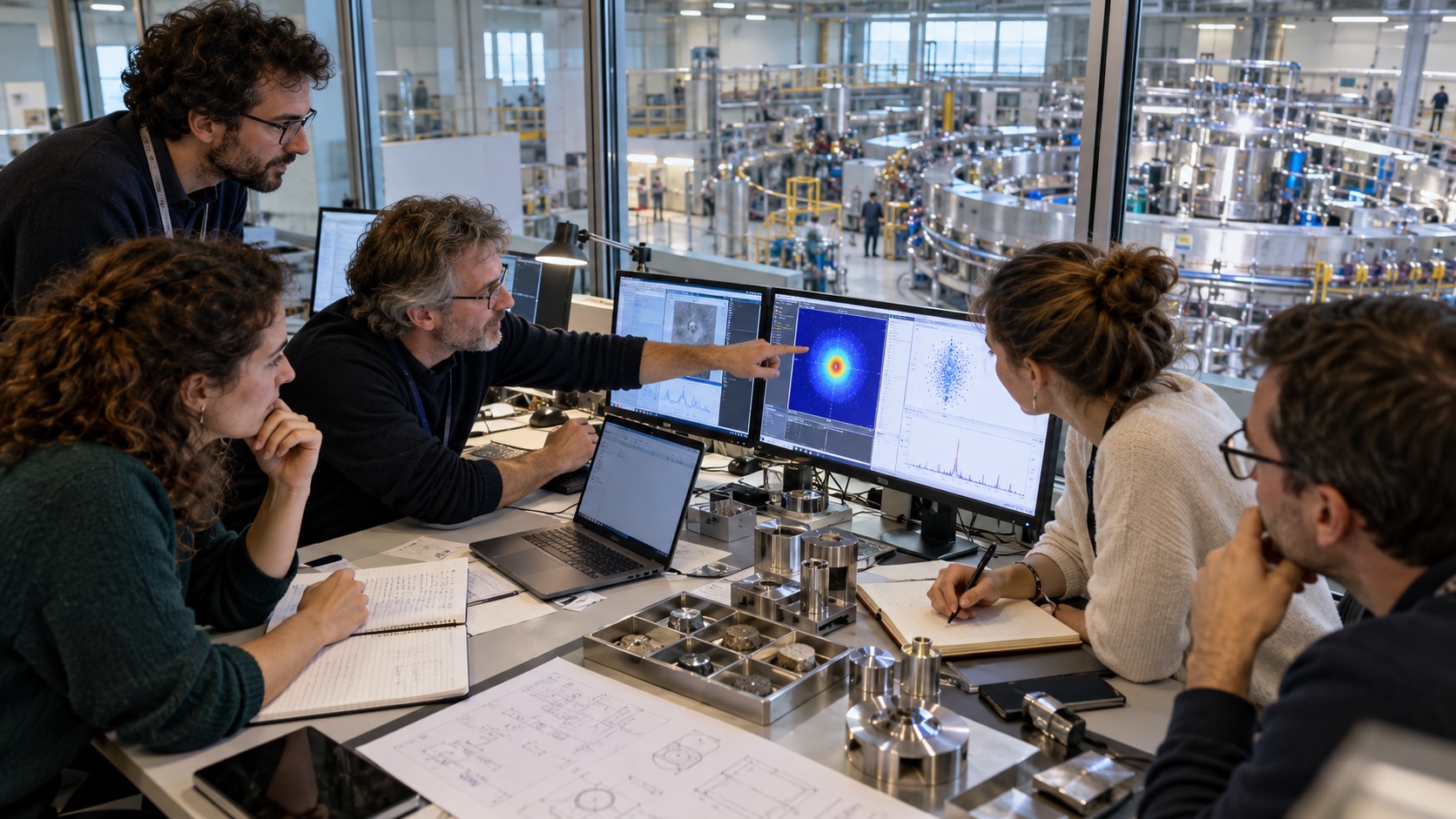
The ERC's effects extend beyond principal investigators. It reports that each grantee employs an average of seven team members and that more than 75,000 postdoctoral researchers, doctoral candidates and other staff currently work in ERC teams. These positions train people in laboratories, archives, field sites, software, instruments and research management. Team members can later move across Europe, take methods into other institutions, create companies, teach or build public services. A grant becomes part of a continental skills network.
Research output should be described without turning correlation into mythology. The ERC reports more than 200,000 scientific articles, over 2,200 patent and other intellectual-property applications, and more than 400 start-ups founded or co-founded by grantees. It also notes major prizes awarded to ERC grantees, including Nobel and Fields honours. Those distinctions do not mean the prize-winning work was always produced by one ERC project, and patents do not automatically become useful products. They show that the system repeatedly selects people and environments operating near the frontier.
The ESRF synchrotron, European XFEL, CERN, EMBL and EuroHPC features describe shared facilities and services. The ERC funds a complementary layer: people and questions that can use such infrastructure, invent methods for it or work in fields requiring no giant machine at all. Europe needs both common equipment and freedom for an investigator to ask what the equipment, archive, proof or field study should reveal.
Uneven capacity, low success rates and responsibility
Success is not evenly distributed. Institutions in countries with strong research systems, grant offices, salaries, infrastructure and recruitment networks can attract more successful applicants. Excellence-based selection can reveal those differences and reinforce them at the same time. Widening participation cannot be solved by lowering scientific standards inside the final ranking; it requires earlier investment in national research careers, mentoring, facilities, institutional freedom and conditions that let excellent people propose competitive work from more places.
Competition is also severe. The 2025 Advanced Grant round received 3,329 eligible-domain submissions and selected 319, a success rate of about 9.6%. Low rates can waste researcher and reviewer time, favour people with institutional support and make a good rejection feel like a verdict on scientific worth. Transparent feedback, sensible resubmission rules, enough budget and evaluation that recognises different disciplines and career paths are part of preserving the ERC's legitimacy.
Academic freedom and public responsibility must travel together. Investigator-led research needs protection from short political cycles, but grants still use public money and must meet ethics, research-integrity, security, data, animal-welfare and grant-management duties. Host institutions need to prevent harassment and conflicts, support open science where appropriate and respect legitimate protection for personal data, sensitive locations, intellectual property and security. Autonomy is strongest when responsibility is clear rather than performative.
Open European strength and the federal lesson
The ERC is European, but its knowledge is not a fortress. International reviewers judge proposals; researchers and team members cross borders; publications, data, software, methods, patents and trained people circulate globally; and non-European partners can participate when the rules and science justify it. Strategic strength in research does not come from pretending Europe can discover alone. It comes from giving Europe enough attractive, independent capacity to choose collaborations from a position of contribution.
For Federal Europa, the ERC is a quiet federal institution in practice. Member countries retain their universities, academies, languages, disciplines and national funders. At European level, they pool a budget large enough to let an idea compete beyond its birthplace and a researcher build a team beyond one national cycle. The shared layer makes diversity more powerful because a proposal from one place can be tested by peers and hosted in another while contributing to knowledge available far beyond both.
The next test is not whether every grant produces a headline. Frontier research must be allowed to fail honestly, change direction and generate knowledge that becomes useful much later. Europe should judge the ERC by the quality and independence of its selection, the conditions it creates for teams, the distribution of opportunity, the integrity of the work and the cumulative strength of its research environment. The achievement is already substantial: Europeans built a public institution willing to back ideas before the rest of the world knows which ones will matter.